Somos Impact Travel Get in Touch
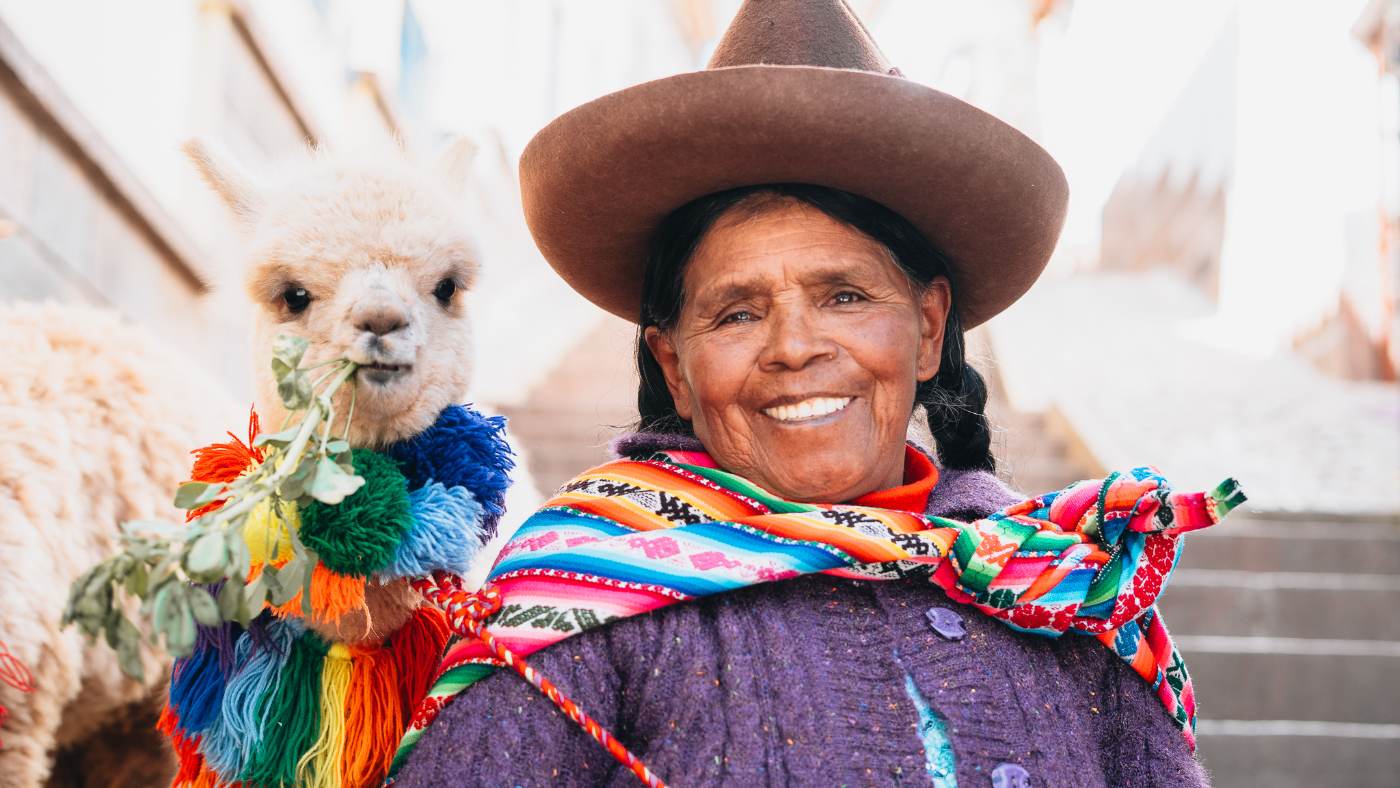
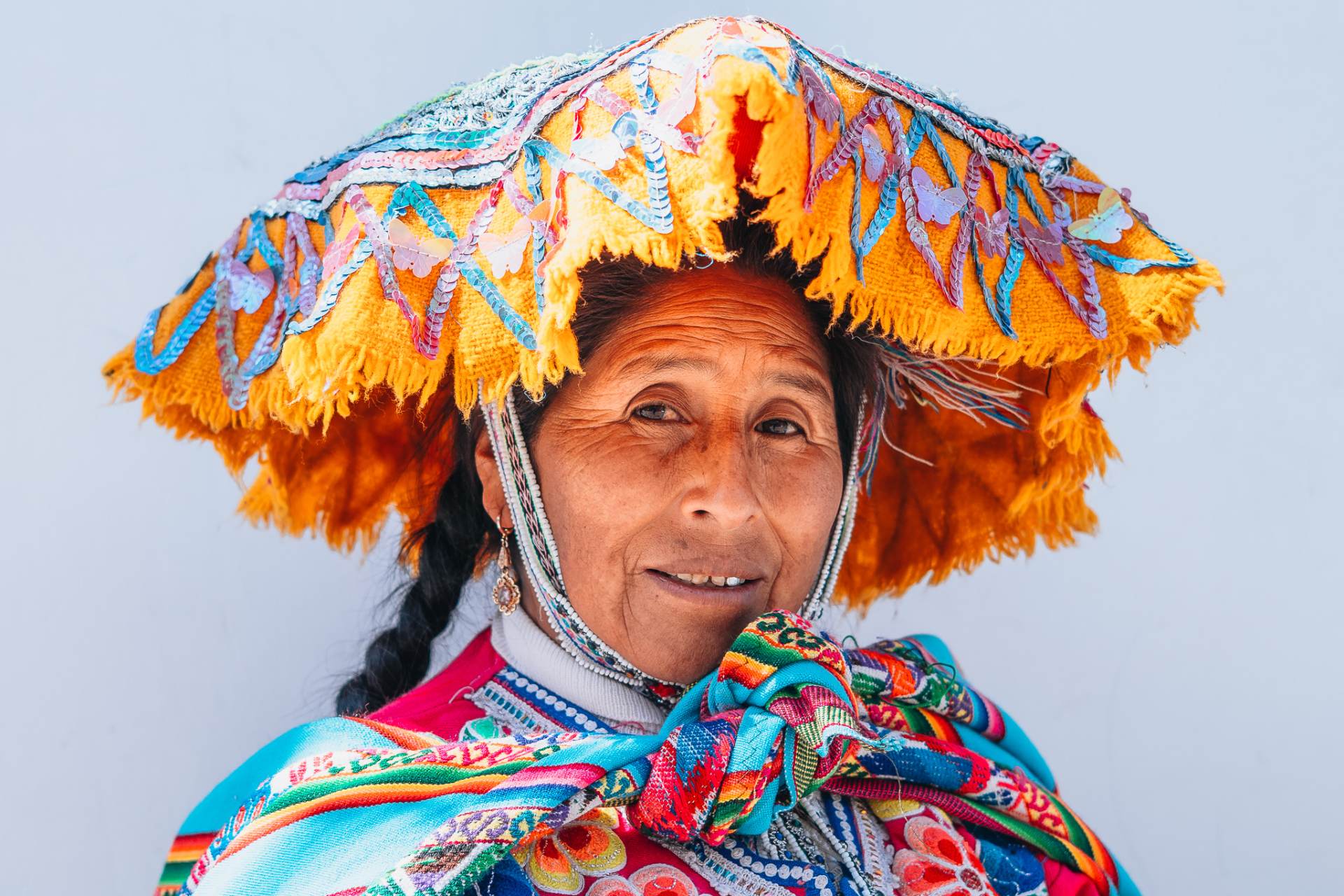
A woman in traditional Andean dress in the Sacred Valley
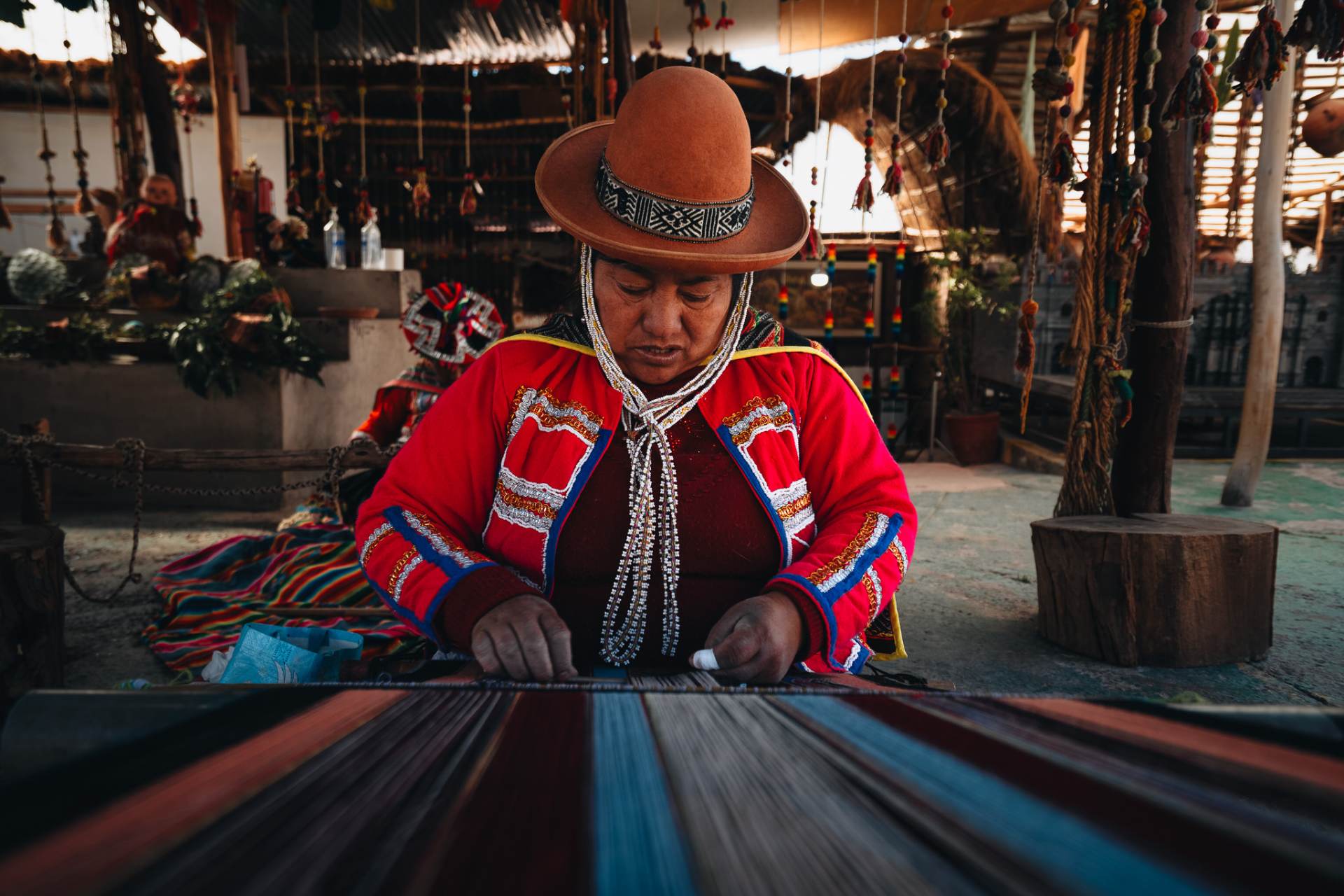
A weaver at a backstrap loom in the Sacred Valley
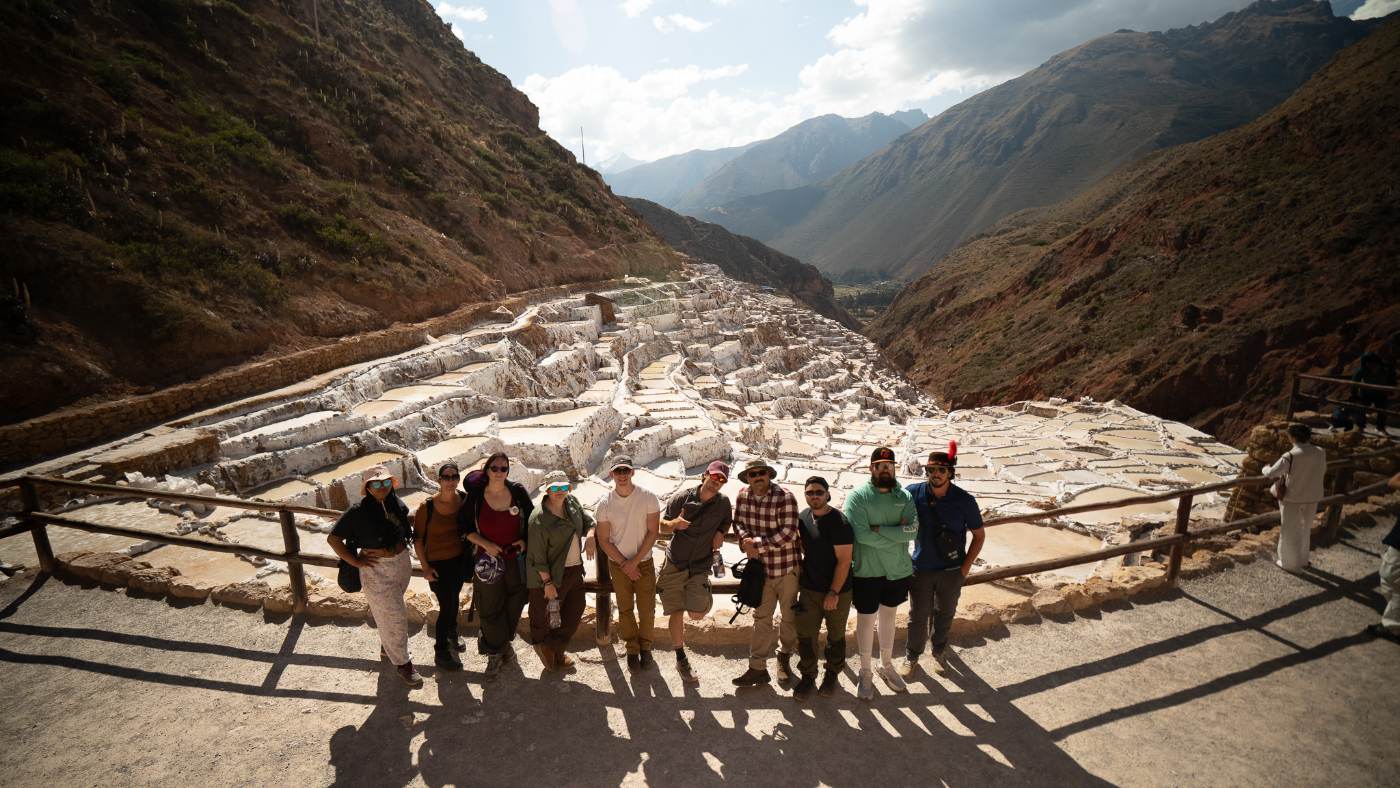
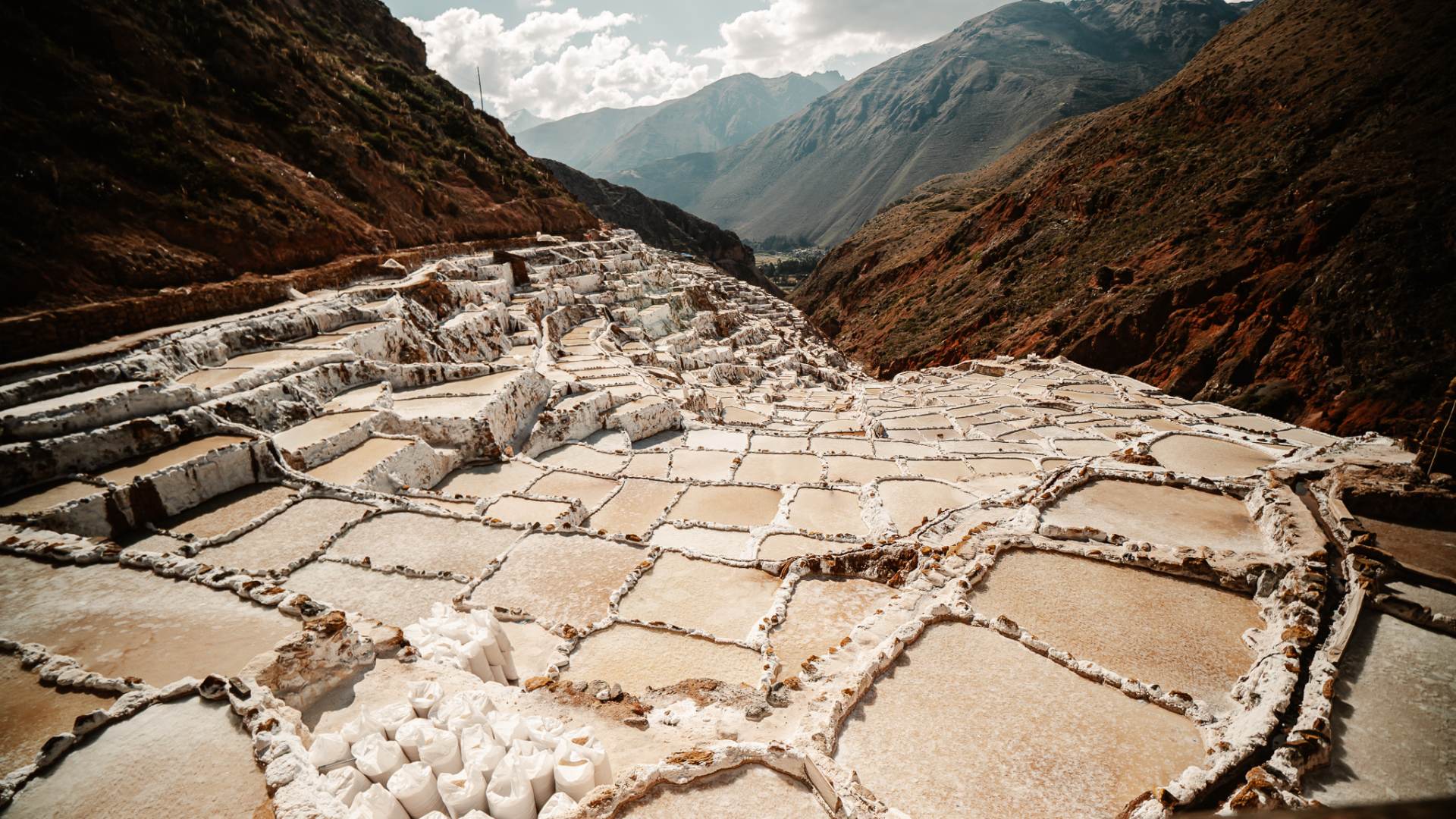
The communally managed salt pans at Maras
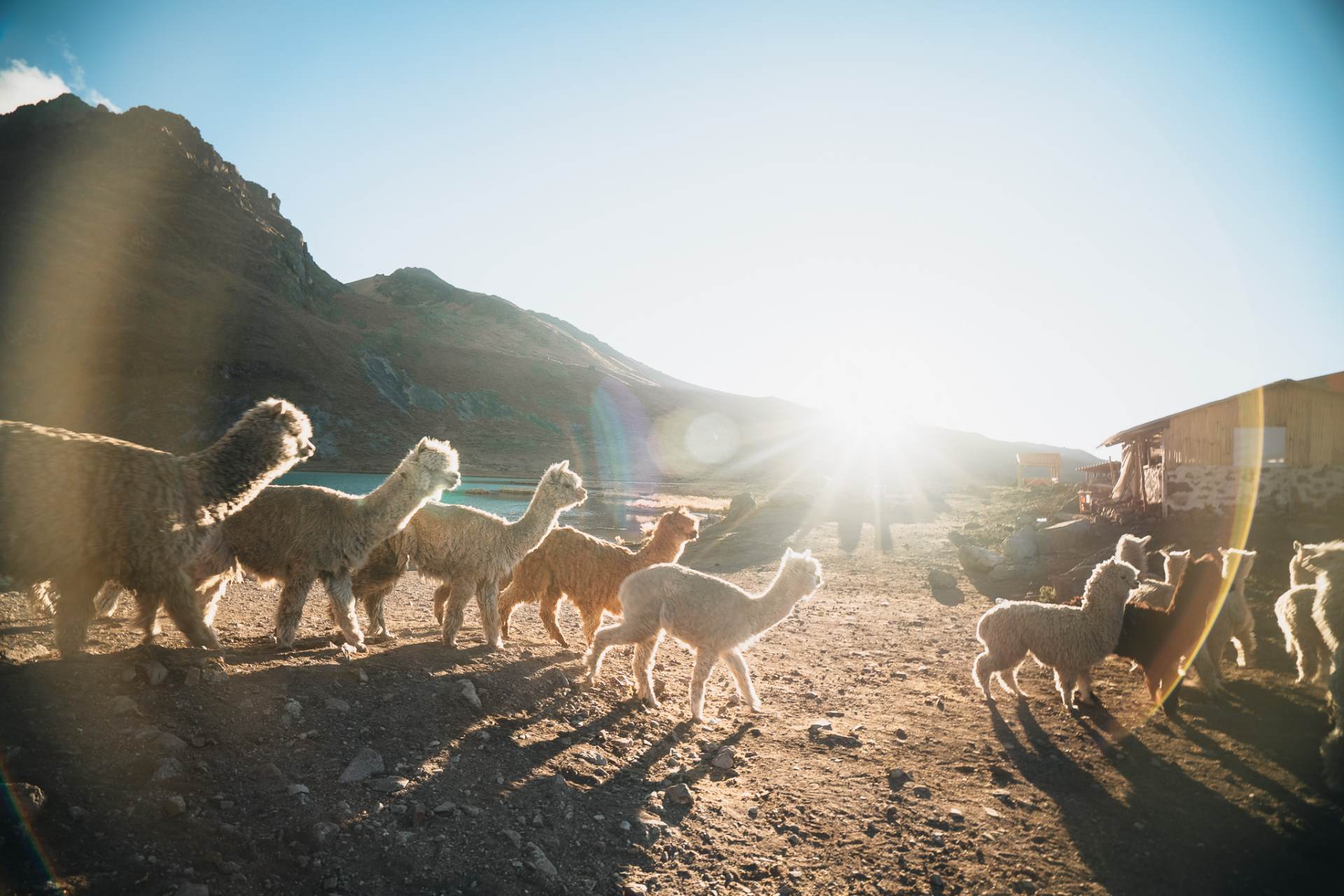
An alpaca herd at first light in the highlands
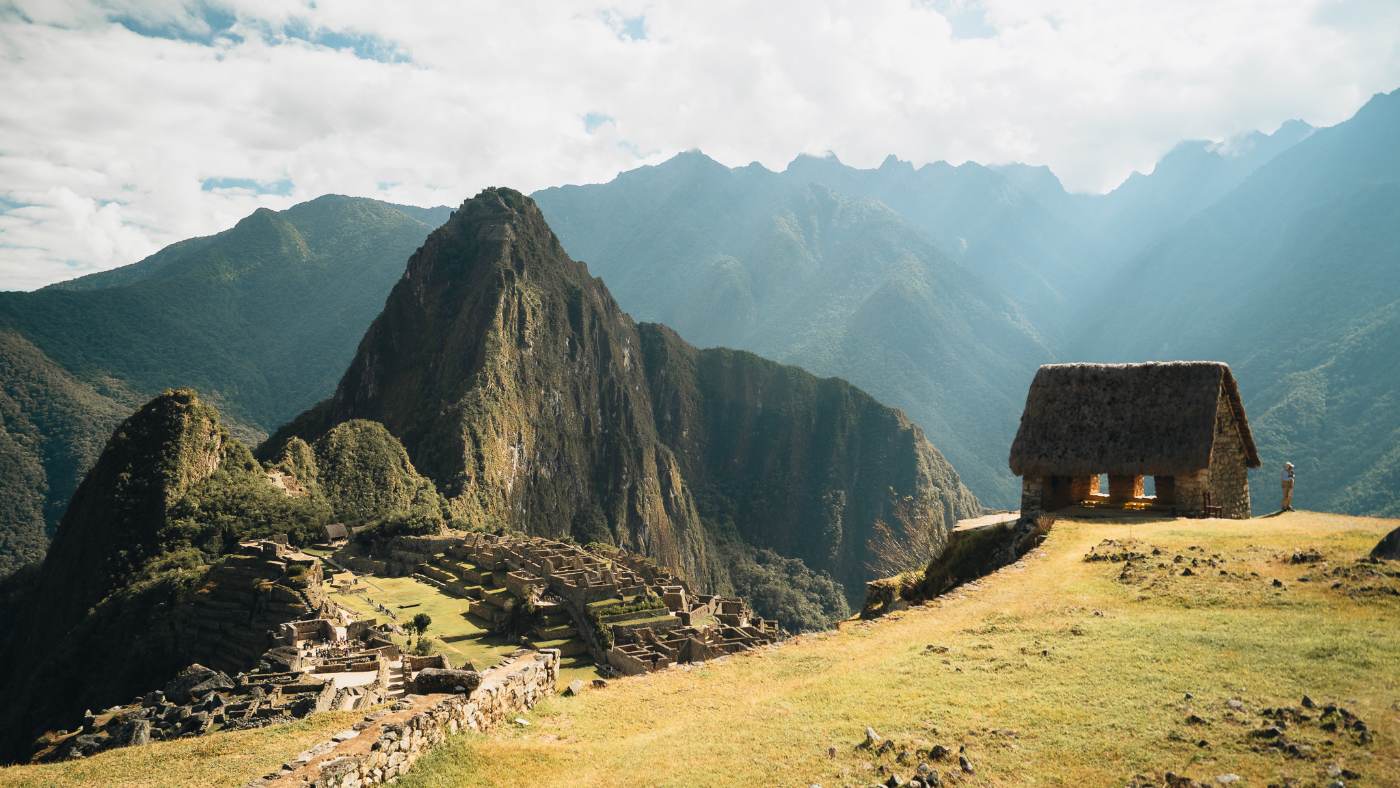
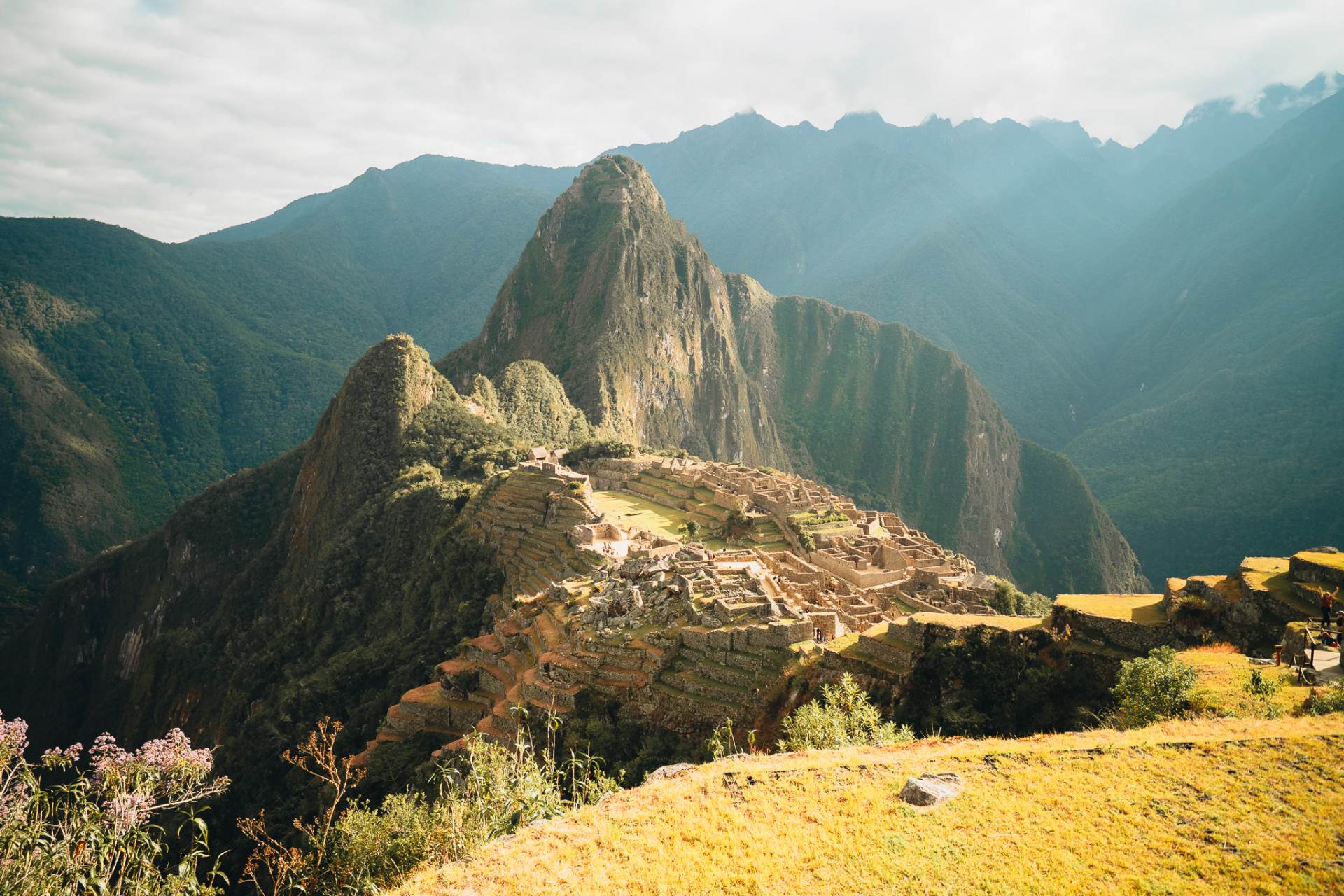
Machu Picchu at the far end of the Inca road network

Field learning expedition · Peru

Trade & Terraces in the Sacred Valley

A nine-day expedition through Cusco, the Sacred Valley, and Machu Picchu.

Start planning your journey

Duration

9 days, 8 nights

Group

10 to 20 students, plus adult leaders

Locations

Cusco, Urubamba, Ollantaytambo, Patacancha, Misminay, Machu Picchu

Dates

Flexible, usually a spring or summer window

The driving question

How have trade infrastructure and cooperative enterprise sustained highland communities in the Sacred Valley?

This nine-day program traces the trade infrastructure of the Inca empire through Cusco and the Sacred Valley, then follows that throughline into the cooperative and family-run economies still operating today: the weaving cooperative in the Patacancha Valley, the independent chicheria and craft market in Ollantaytambo, and the salt mines at Maras.

Students move from Sacsayhuaman and Qorikancha in Cusco through Ollantaytambo and a rural bed-and-breakfast stay in the farming community of Misminay, before closing at Machu Picchu and returning to Cusco. Students investigate the driving question from a different angle each day.

Lens one

Infrastructure and Engineering

How did a pre-industrial empire move goods, labor, and information across a mountain range without wheels or iron tools? Sacsayhuaman and the Inca road network open the question at its source.

Lens two

Agricultural Systems

Moray and Maras carry the question into agriculture and resource management: terracing as applied science, salt harvesting as a communally governed system that has outlasted the empire that built it.

Lens three

Cooperative and Family Economics

Ollantaytambo puts two models side by side: the Patacancha weaving cooperative, which sets its own prices as a collective, and the town's chicheria and craft market, family businesses with no cooperative structure behind them.

Lens four

Direct Exchange

Students work alongside the people running these systems now: cooperative members leading weaving instruction, families hosting the group in Misminay, vendors setting their own prices at San Pedro Market.

Itinerary at a glance

Eight Nights, Seven Places

Night 1 · Cusco

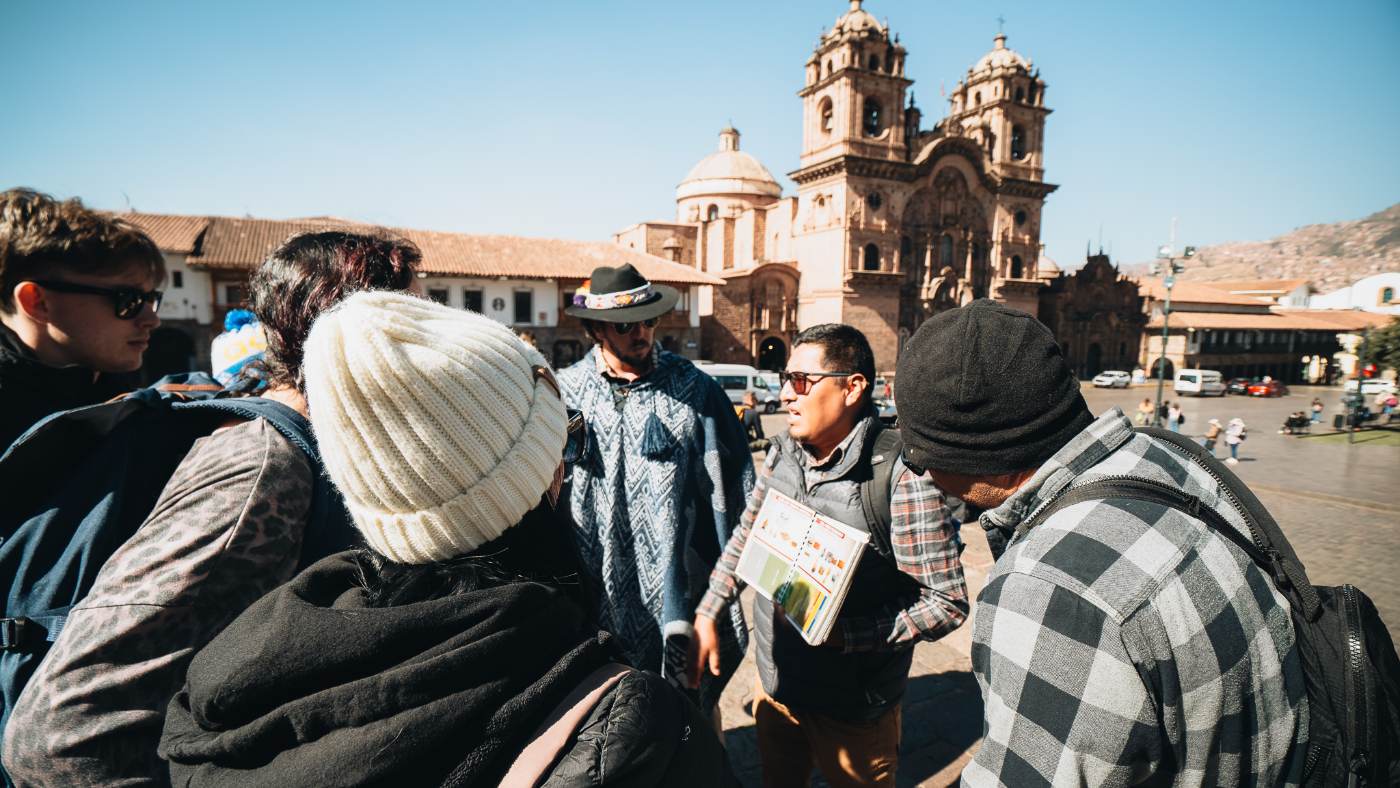
Arrival, altitude acclimatization, orientation walk on the Plaza de Armas.

Night 2 · Urubamba

Sacsayhuaman and Qorikancha with a licensed local archaeologist, then transfer into the Sacred Valley.

Night 3 · Ollantaytambo or Urubamba

Patacancha weaving cooperative in the morning, chicheria and craft market in the afternoon.

Night 4 · Ollantaytambo

Six-kilometer trade-route hike from Pumamarca down into Ollantaytambo.

Night 5 · Misminay

Moray, the Maras salt mines, and a rural bed-and-breakfast stay with farming families.

Night 6 · Aguas Calientes

Ollantaytambo old town and the Pinkuylluna storehouses, then the train down the valley.

Night 7 · Cusco

Machu Picchu in the morning, then the full bus, train, and van sequence back to Cusco.

Day 8 · Departure

San Pedro Market, closing workshop, transfer to Cusco airport.

Safety and student support

Safety Is What Makes Everything Else Possible

Every Somos program runs on protocols developed and refined across 10+ years of in-country operations. Two elements of this itinerary get specific attention: altitude, and the one night in Misminay without a hotel backup.

24/7 In-Country Support

Emergency communication and escalation protocols run around the clock, with local field educators rather than rotating tour guides.

CPR and First-Aid Certified Guides

Bilingual guides certified in CPR and first aid, with comprehensive medical kits on all activities.

Licensed and Insured Transport

All providers vetted, licensed, insured, and experienced with student groups. Road transfers are planned across multiple vehicles, with headcounts at airport, train, and bus queues.

Altitude and Accommodation Protocols

Acclimatization is built into Day 1 with hydration monitoring throughout. In Misminay the group splits across several family properties, with headcount confirmed at each one every night.

About Somos Impact Travel

Direct Relationships, Not Subcontracted Access

Somos Impact Travel builds partnership-based learning expeditions across Central and South America, working directly with communities, cooperatives, and family-run sites rather than reselling access through other operators. In the Sacred Valley that means the Patacancha weaving cooperative, Ollantaytambo's independent artisans, and the Misminay bed-and-breakfast network are direct relationships rather than subcontracted services.

Our community partners are the teachers and the protagonists of every program, never the supporting cast. That is a structural choice, not a marketing line. Ground transfers, train bookings, and site reservations are managed in-house, with contingency planning for delays and ticketing changes built into the schedule as standard practice.

10+ years

of in-country operations, with direct partnerships now established in the Sacred Valley

1,000+

travelers guided through programs across the region

15+

indigenous community partnerships

From travelers in Peru

What the Last Group Said

"We spent our first days deep in the Amazon, then transitioned to the stunning high-altitude culture of Cusco, explored the Sacred Valley, fed alpacas, visited ancient salt mines, and took the breathtaking train to Machu Picchu."

Sandra Magura · AMSG Peru · Peru · 2026

"He knew the history, culture, and little details that you probably wouldn't get on your own. After spending so much time together, he felt less like a guide and more like a friend who happened to know Peru better than anyone."

Joel Koon · AMSG Peru · Peru · 2026

"My team and I only pair up with the best organizations to ensure our experiences are safe, unforgettable, and positively impactful to the communities we visit. Somos Impact Travel not only met our expectations but massively surpassed them."

Jasmin Hester · AMSG Peru · Peru · 2026

Detailed itinerary

Day by Day

Cusco: Inca capital · Sacred Valley: trade and terraces · Misminay: rural immersion · Machu Picchu · departure

Arrival in Cusco

Day 1 · Cusco

Arrival and Acclimatization in Cusco

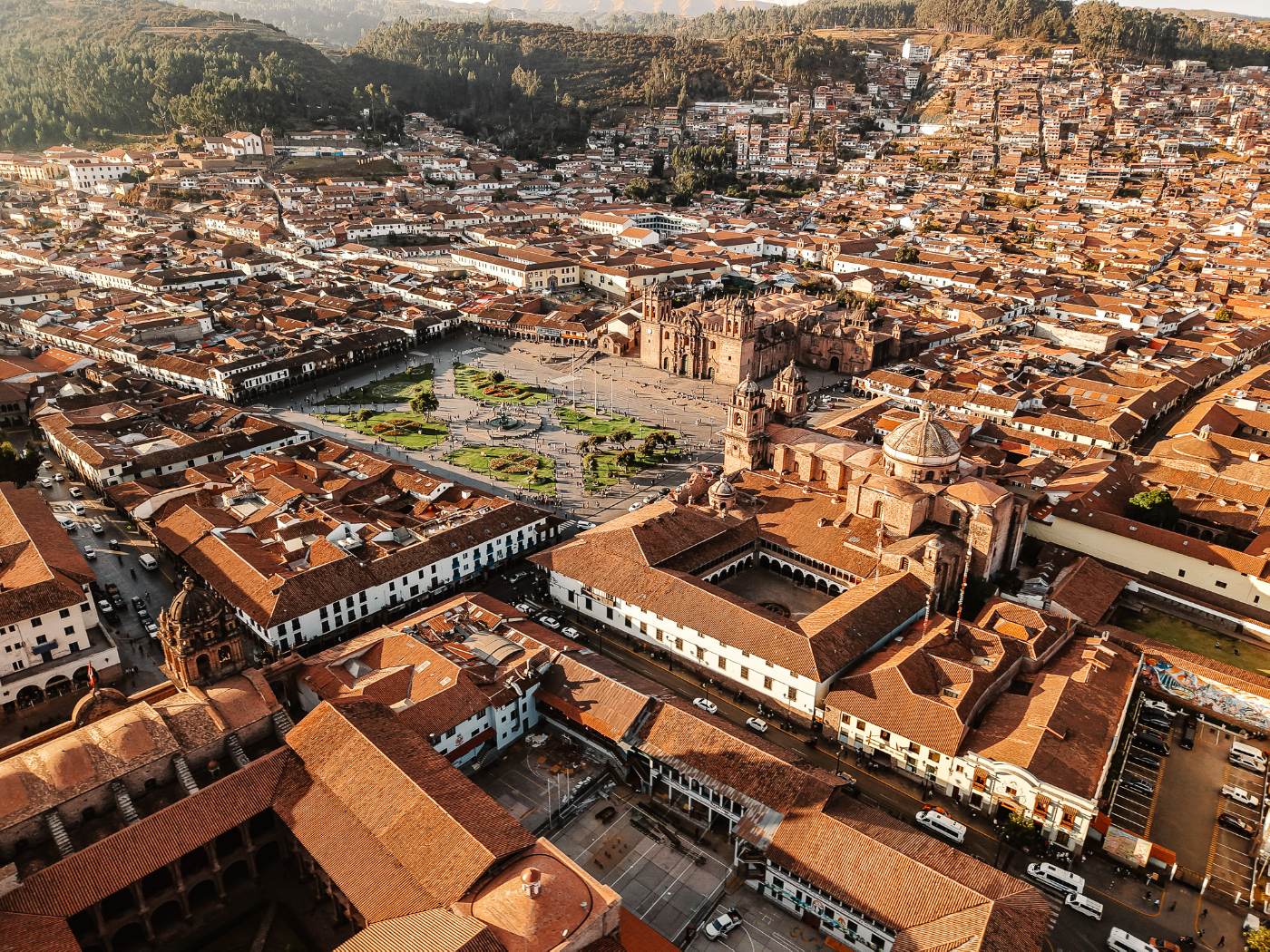
Cusco sits at 11,150 feet, the historic capital of the Inca empire and the starting point for the road network the group will trace over the next nine days. The Qhapaq Nan once linked the empire from coast to Amazon, and commerce, administration, and cultural exchange moved along it long before European contact. The first day is built around altitude, not activity: the body needs time before the itinerary asks anything of it.

Morning

  • Flights arrive at Alejandro Velasco Astete International Airport
  • Private transfer to the hotel

Afternoon

  • Rest and hydration at altitude, with no strenuous activity scheduled
  • Light orientation walk around the Plaza de Armas, a commercial and civic center since Inca times
  • Introduction to Cusco's role as the administrative center of the Inca road network

Evening

  • Welcome dinner and program orientation
  • The week's driving question introduced, from Inca roads to the cooperatives and family businesses active today
  • Reflection: "What do you already assume about how a pre-industrial empire moved goods across a mountain range, and where do you expect this week to challenge that?"

Overnight: Hotel in Cusco (Night 1 of 7)

Logistics: Airport arrival and group headcount, altitude acclimatization protocols, hydration monitoring.

Visitors understood why the capital of an empire sat at 11,150 feet, and what altitude asks of a body before any of the work begins.
Inca stonework above Cusco

Day 2 · Cusco to Urubamba

Cusco Archaeology and Transfer to the Sacred Valley

Sacsayhuaman sits above Cusco on a ridge that once anchored the empire's ceremonial and military center. Its walls, built from stones weighing over 100 tons and fitted without mortar, mark the starting point of the road system the group traces this week. Qorikancha, the Temple of the Sun, shows Inca stonework with a Spanish colonial church built directly on top of it, two empires stacked in a single structure.

Morning

  • Guided walk through Sacsayhuaman with a licensed local archaeologist
  • Monumental stonework, ceremonial function, and the engineering that moved and fit stones without mortar
  • Continue to Qorikancha, where Inca and colonial architecture are layered directly on top of each other

Afternoon

  • Private van transfer to Urubamba, roughly one hour, across multiple vehicles for the full group
  • Check into accommodations inside the valley the road network was built to serve

Evening

  • Group dinner and orientation for the days ahead
  • Reflection: "What does it take to move 100-ton stones without wheels or iron tools, and what does that tell you about how this empire organized labor?"

Overnight: Urubamba (Night 2 of 7)

Logistics: Uneven stone terrain at Sacsayhuaman, road transfer across multiple vehicles, continued altitude monitoring.

Visitors understood how an empire without wheels or iron tools organized labor at the scale of a 100-ton wall.

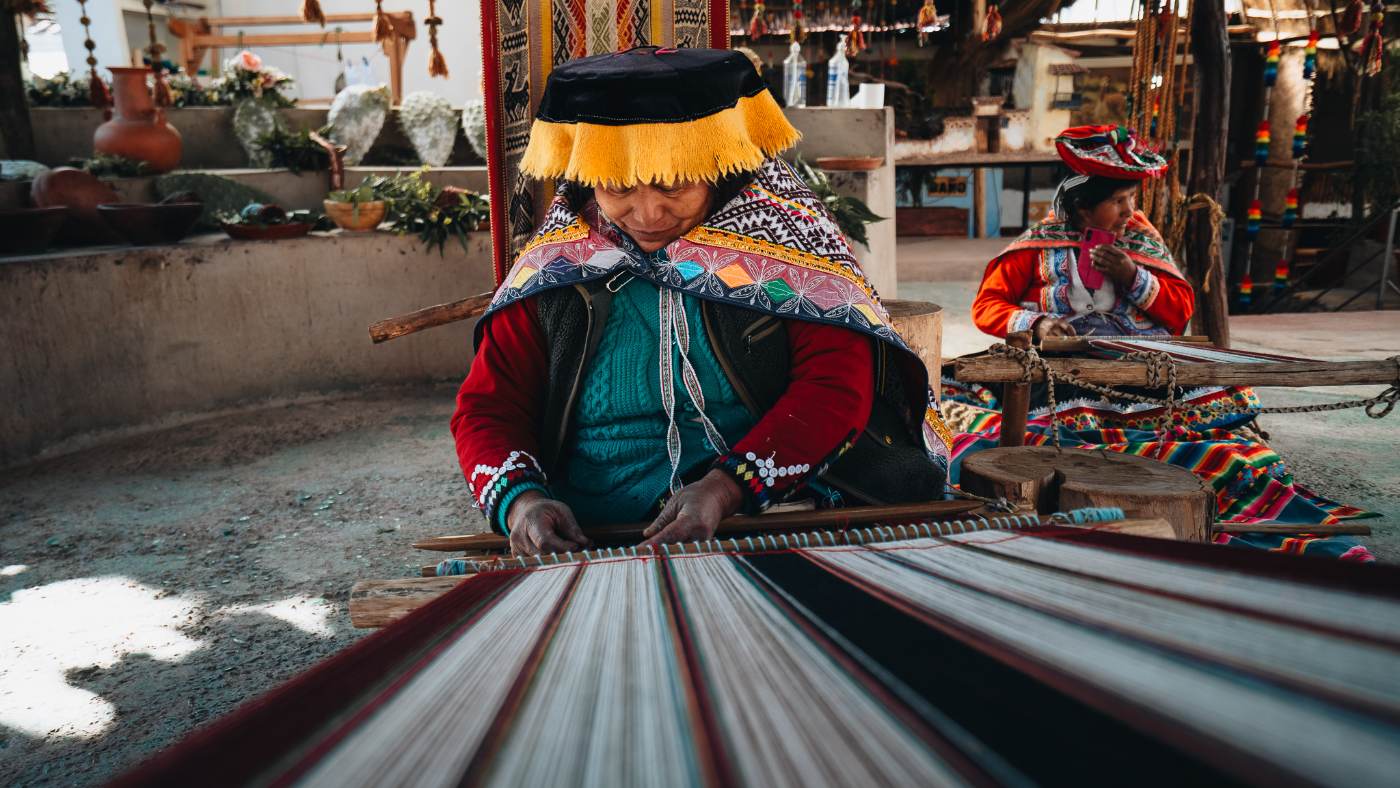
Weaving at the Patacancha cooperative

Day 3 · Patacancha and Ollantaytambo

Weaving Cooperative and Local Enterprise

The weaving cooperative in the Patacancha Valley runs on its own terms. The women who lead it take the group through the full process, raw wool, natural dye from plants and cochineal, hand spinning, weaving on a backstrap loom, and they set the price for anything a visitor buys. The day puts two models of enterprise, formal cooperative and informal family business, side by side in the same afternoon.

Morning

  • Transfer to Ollantaytambo, then up into the Patacancha Valley, roughly one hour
  • Full process from raw wool to finished textile, with a natural dye demonstration
  • Hands-on weaving instruction led by cooperative members
  • Direct purchases support the artisans with no intermediary

Afternoon

  • Return to Ollantaytambo to visit a local farm and chicheria
  • Chicha made and sold the way it has been for generations, direct from producer to customer
  • Continue to the craft market, where artisans sell their own work with no shop taking a cut

Evening

  • Group dinner
  • Reflection: "The cooperative and the chicheria are both family-run, but only one calls itself a cooperative. What actually makes something a cooperative, and does it matter to the person buying?"

Overnight: Ollantaytambo or Urubamba (Night 3 of 7)

Logistics: Altitude and terrain at the weaving community, food and drink safety at the chicheria, market crowd navigation.

Visitors understood the difference between a cooperative and a family business by watching both set their own prices in a single afternoon.

The trail down toward Ollantaytambo

Day 4 · Pumamarca to Ollantaytambo

The Old Trading Route

The path from Pumamarca down to Ollantaytambo follows the same terrain traders used to move goods between highland and valley communities under Inca administration. The six kilometers are non-technical, but the elevation change and thin air make pacing the real work of the morning. Ollantaytambo itself was built to anchor and defend this corridor, positioned exactly where the trade routes converge.

Morning

  • Transfer to Pumamarca
  • Non-technical hike descending toward Ollantaytambo, roughly six kilometers
  • Terrain historically used for trade and travel between highland and valley communities

Afternoon

  • Arrive in Ollantaytambo and visit the archaeological site
  • Built to anchor and defend the same trade corridor the group just walked

Evening

  • Group dinner in Ollantaytambo
  • Reflection: "You just walked a route traders used centuries ago to move goods between these communities. What did the terrain itself tell you about why this route existed?"

Overnight: Ollantaytambo (Night 4 of 7)

Logistics: Hiking terrain and pacing, weather exposure, water and sun protection, group spacing on trail.

Visitors understood why the route ran where it did, having walked the six kilometers it takes to move goods from highland to valley.

The salt pans at Maras

Day 5 · Moray, Maras, Misminay

An Agricultural Laboratory and a Communal Salt Harvest

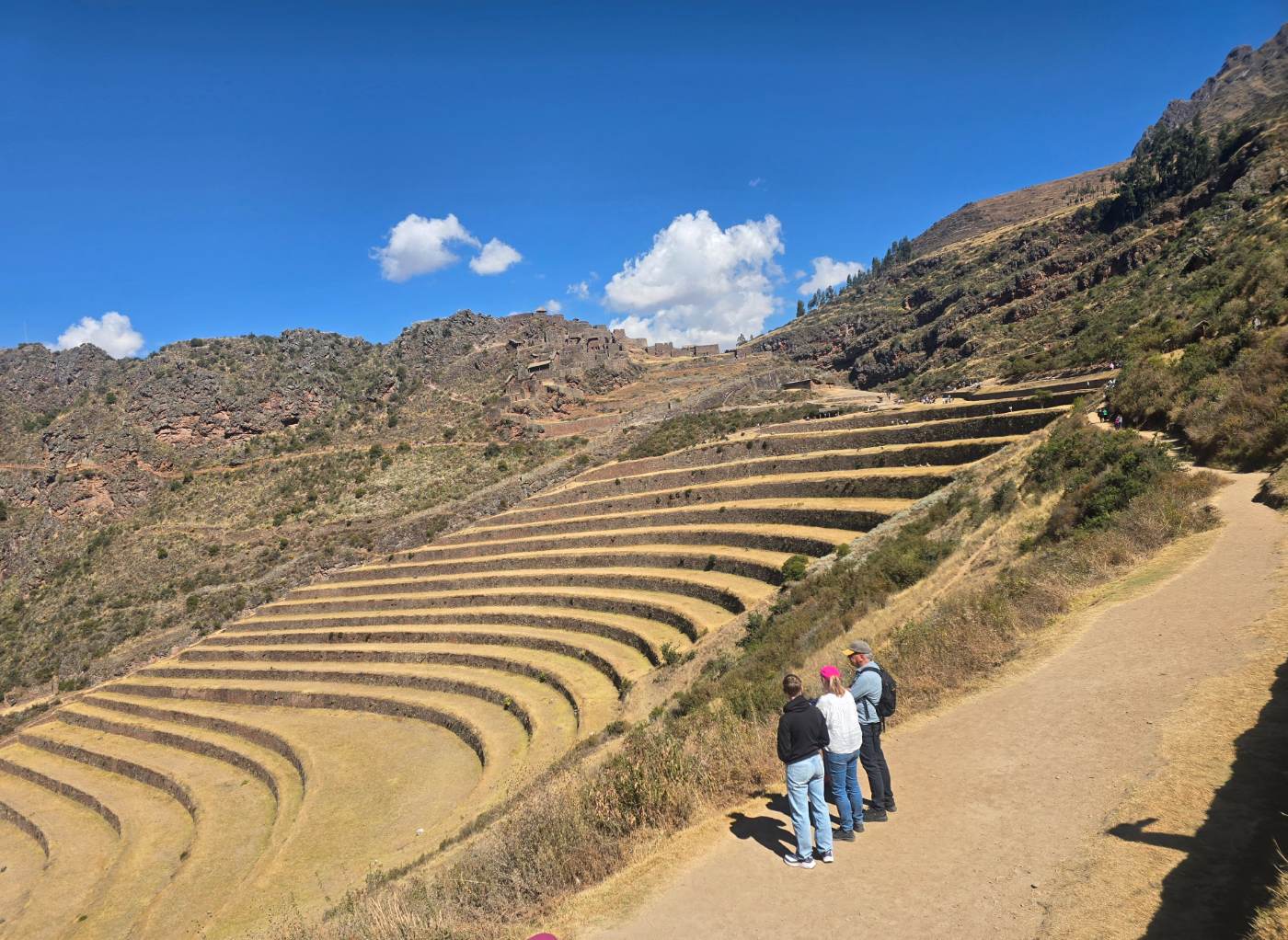
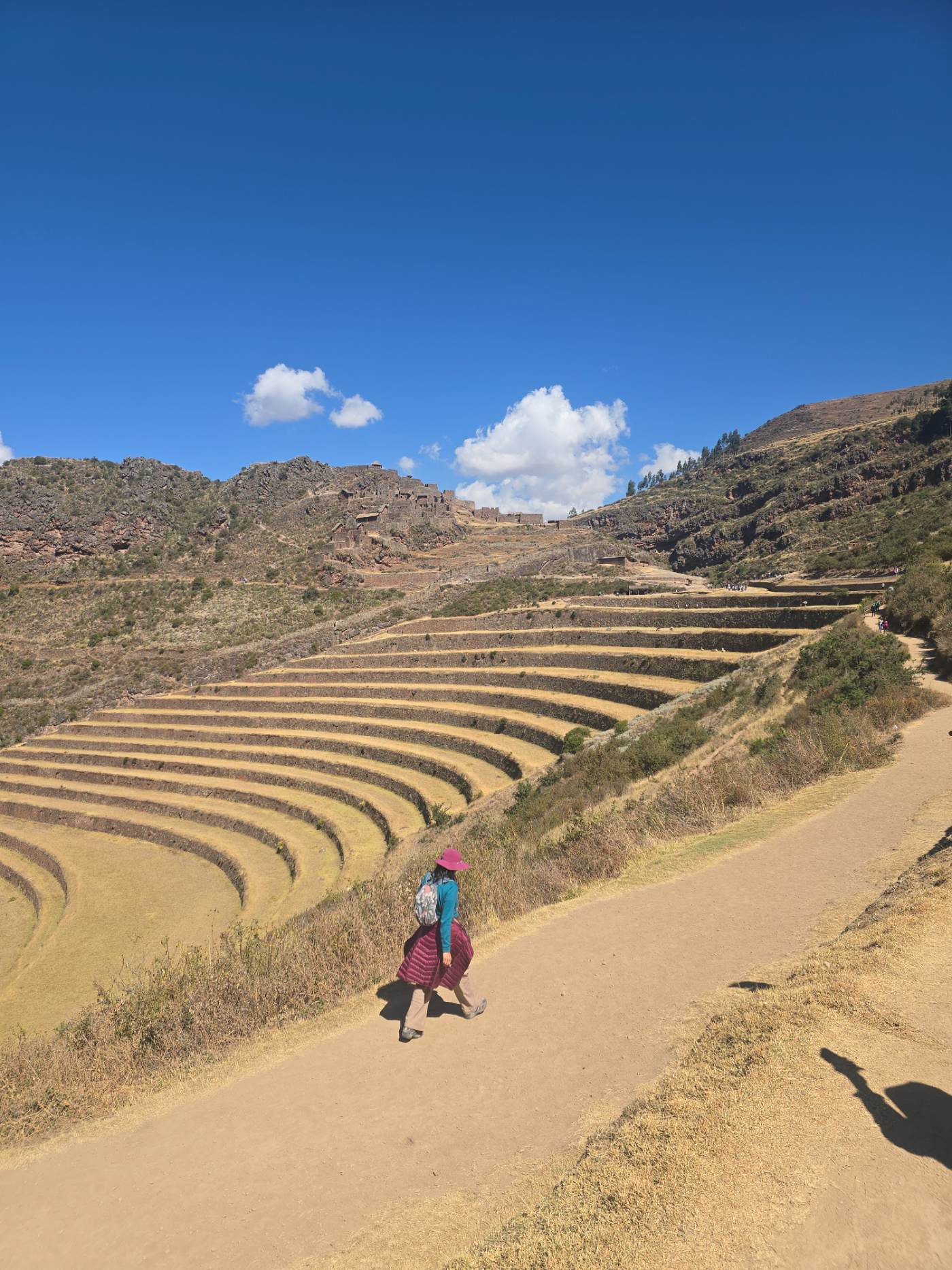
Moray's concentric terraces functioned as an agricultural laboratory: the depth of each ring creates a different microclimate, and Inca farmers used the site to test which crops would grow at which elevation before planting them across the empire. Maras works on a different principle entirely. The salt pans have been worked by the same families for generations, and harvesting rights are managed communally, a resource system that has outlasted the empire that built it.

Morning

  • Moray agricultural terraces
  • Inca experimentation with crops and microclimates across a single site

Midday

  • Maras salt mines
  • Traditional harvesting techniques sustained through communal management, not private ownership

Afternoon and evening

  • Arrive in Misminay, welcomed by the host properties
  • Agricultural and textile demonstrations led by the families themselves
  • Traditional lunch prepared by the community, dinner with the host families
  • Reflection: "Maras has been worked communally for generations without anyone owning it outright. What would it take for a resource system like that to work back home?"

Overnight: Rural bed-and-breakfast stay in Misminay (Night 5 of 7)

Logistics: Altitude in Misminay at roughly 3,700 meters, overnight temperature drop, rustic facilities with no hotel backup this night, headcount confirmed across multiple properties.

Visitors understood how a salt harvest stays productive for generations under communal management rather than private ownership.

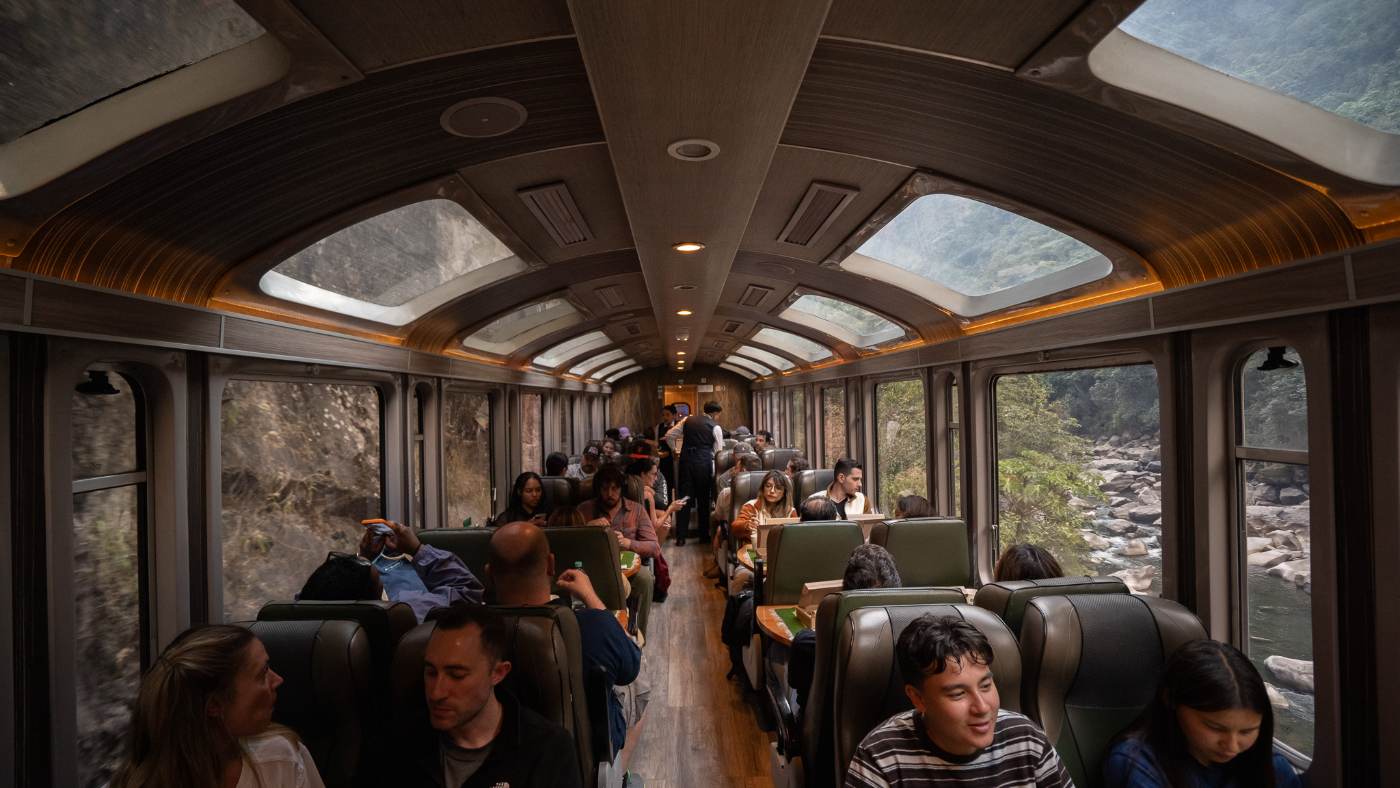
Train through the valley to Aguas Calientes

Day 6 · Ollantaytambo to Aguas Calientes

Ollantaytambo, the Living Inca Town

Ollantaytambo is the only town in Peru still built on its original Inca street grid, and the water channels running along the streets today are the same ones the Incas engineered five centuries ago. The Pinkuylluna storehouses above town were built to store grain cool and dry, away from the valley floor, and the short climb up to them gives a full view over the ruins and the grid at once.

Morning and midday

  • Depart Misminay, transfer to Ollantaytambo, roughly one to one and a half hours
  • Guided walk through the old town: original Inca street plan, water channels still in use, local market
  • Optional short climb to the Pinkuylluna storehouses for a full view over town and ruins

Afternoon and evening

  • Board the train to Aguas Calientes, roughly one hour forty-five minutes
  • Arrive Aguas Calientes, dinner
  • Reflection: "The water channels in Ollantaytambo are still carrying water after 500 years. What does infrastructure built to last that long ask of the people who built it?"

Overnight: Aguas Calientes (Night 6 of 7)

Logistics: Steep terrain on the Pinkuylluna climb, footing on stone steps, train boarding logistics, headcount at each transfer point.

Visitors understood what five centuries of working water channels ask of the people who build infrastructure.

Machu Picchu

Day 7 · Machu Picchu to Cusco

The Far End of the Road Network

Machu Picchu sits at the end of the same road network the group has been tracing all week: terraces, water systems, and a citadel connected to the rest of the empire by the same infrastructure logic seen at Moray, Ollantaytambo, and the Patacancha Valley. The morning is built around slow observation rather than a rushed circuit. It is also the longest travel day of the trip.

Morning and midday

  • Bus from Aguas Calientes to Machu Picchu, roughly 25 to 30 minutes
  • Guided tour of the citadel with a professional local guide licensed for Machu Picchu
  • Terraces, water systems, and the road network that connected the site outward
  • Reflection time on site, bus back down, lunch in Aguas Calientes

Afternoon and evening

  • Train from Aguas Calientes to Ollantaytambo, roughly one hour forty-five minutes
  • Private van transfer to Cusco, roughly one and a half to two hours, arriving late evening
  • Reflection: "You've now seen this road network at its source in Cusco and at its furthest point here. What did this system actually connect, and what held it together?"

Overnight: Cusco (Night 7 of 7)

Logistics: Bus queue timing at Machu Picchu, a full day of transfers, fatigue management, late evening arrival, headcount at each transfer point.

Visitors understood Machu Picchu as one node on a road system rather than a destination standing on its own.

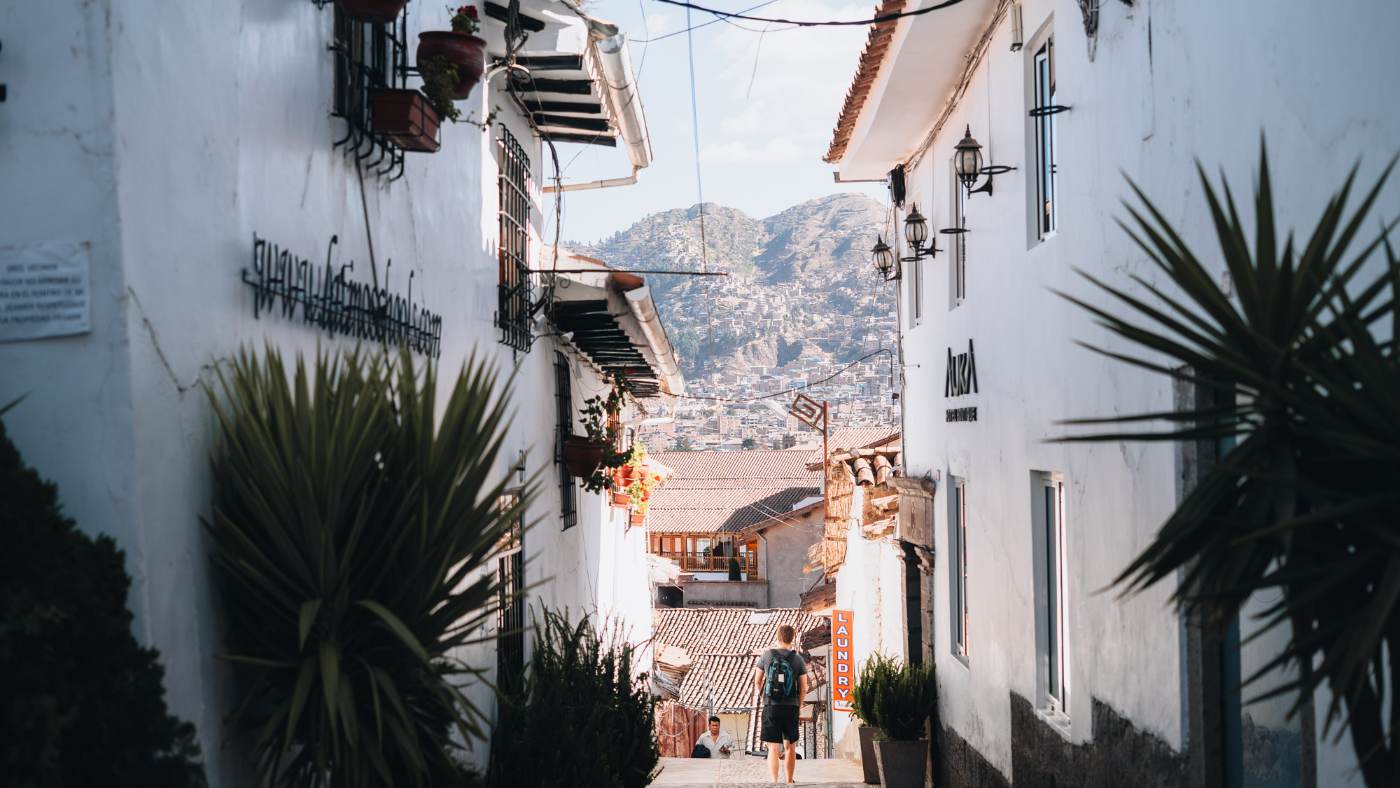
San Pedro Market in Cusco

Day 8 · Cusco

Reflection and Departure

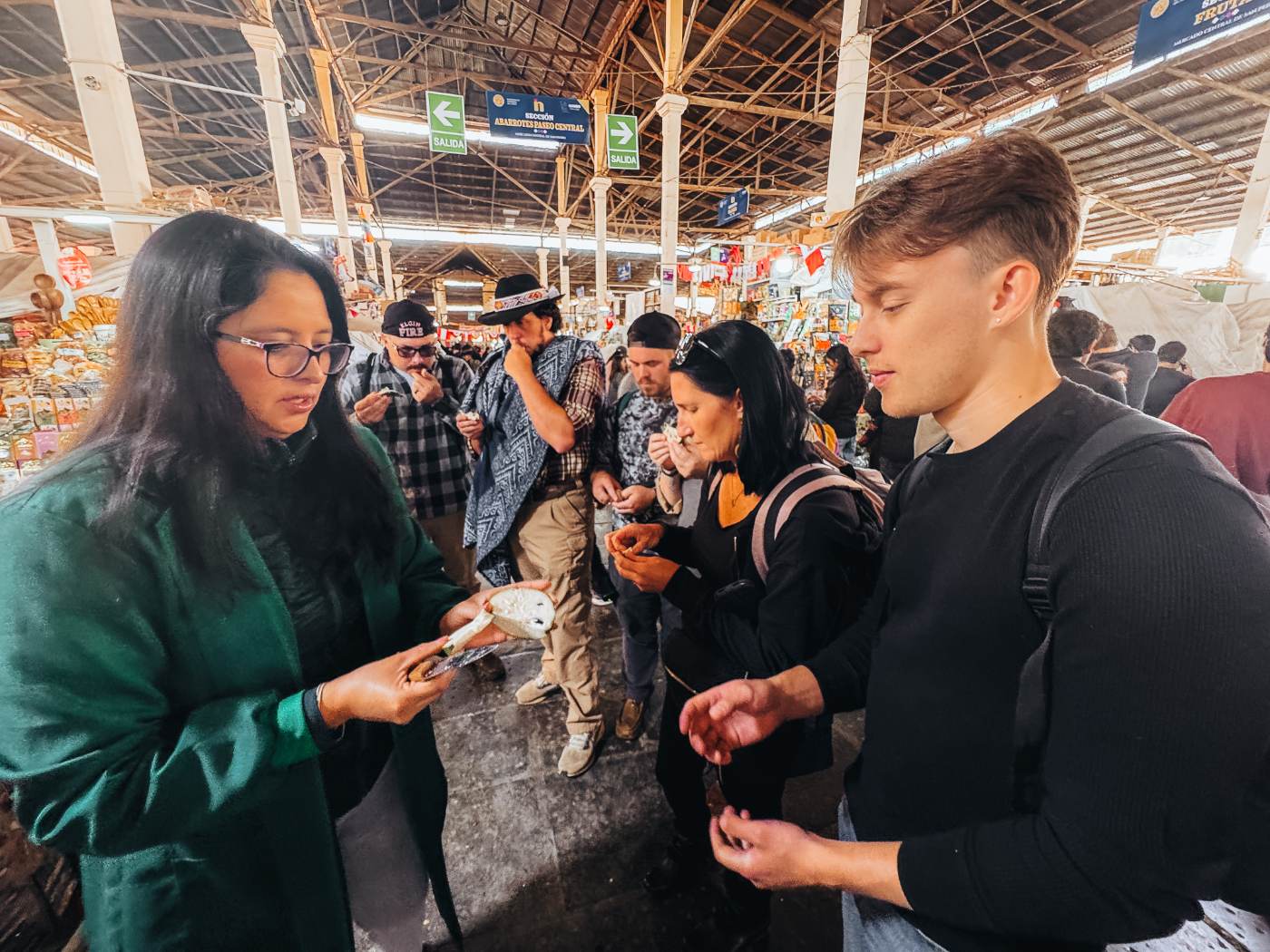
The last morning stays in Cusco, at San Pedro Market, a working market rather than a tourist stop, where the group has a final chance to see the same exchange systems encountered all week: vendors, cooperatives, direct sales, prices set locally. The closing workshop connects the week's throughline to the economic systems students will encounter at home.

Morning

  • Explore Cusco and San Pedro Market, a working market, not staged for visitors

Afternoon

  • Facilitated workshop connecting trade, cooperative enterprise, and community-managed economics
  • Private transfer to Cusco airport, departure

Overnight: Departure day

Logistics: Departure timing against flight schedules, final headcount and passport check, luggage confirmation.

Visitors understood the week's throughline in a working market: prices set locally, goods sold direct, systems still running.

Impact partners

The People Running These Systems Now

Three partners carry this itinerary. Each one is a direct relationship, each one leads its own sessions, and in each case the money students spend on site goes to the people doing the work.

A cooperative member in the Patacancha Valley

Patacancha Weaving Cooperative

The cooperative above Ollantaytambo is run by Quechua women who control the full production process: raw wool, natural dye from cochineal and local plants, hand spinning, and backstrap-loom weaving. It sets its own prices for anything sold directly to visiting groups, with no distributor or shop taking a cut, and is supported by the nonprofit Awamaki, which works with weaving groups across the Sacred Valley to sustain fair-trade practices.

Participants spend a full morning working through each stage with cooperative members leading the instruction. Purchases made on site go directly to the weavers who made them.

Student outcome: Hands-on instruction in traditional weaving and natural dye from working cooperative members.

Lens of inquiry question: What changes for a producer who sets her own price?

Direct sale in a Peruvian market

Ollantaytambo's Independent Artisans and Chicherias

Ollantaytambo runs a second economy alongside its cooperative: a family-run chicheria that has made and sold chicha the same way for generations, and a craft market where individual artisans sell their own work. Neither operates under a cooperative structure. Both are family businesses that set their own hours, recipes, and prices.

Participants visit the chicheria in the afternoon, then move through the craft market to see the same direct-sale principle applied to textiles, ceramics, and woodwork.

Student outcome: Comparison of formal cooperative and informal family-run enterprise operating in the same town.

Lens of inquiry question: What does a cooperative structure add that a family business already does on its own?

Farmland above the Sacred Valley

The Misminay Rural Bed-And-Breakfast Network

Misminay is a Quechua farming community above the Sacred Valley at roughly 3,700 meters. The group stays overnight in a small network of family-run rural bed-and-breakfasts split across several properties. Families lead the agricultural and textile demonstrations themselves and prepare the group's meals from what they grow.

Participants share a home, a meal, and an evening with the family. It is also the only night of the program without a hotel backup.

Student outcome: Rural immersion with Misminay families, sharing meals and daily life directly.

Lens of inquiry question: How does a farming household decide what to grow, sell, and keep?

Learning outcomes

Academic and Experiential Outcomes

Field Research and Systems Thinking

  • Observation and analysis of Inca infrastructure: roads, terracing, water systems, storage
  • Inquiry-based questioning across archaeology, economics, and community systems
  • Synthesis of observations from multiple sites into one understanding of how trade shaped this valley
  • Guided engagement with a licensed local archaeologist on Inca engineering methods

Economic and Cooperative Systems

  • Direct exposure to a weaving cooperative that sets its own prices and terms
  • Comparison of cooperative and family-run enterprise in the same town
  • Analysis of the Maras salt mines as a communally managed resource system
  • Critical engagement with how community-based economies function without conventional ownership

Cultural Competency and Craft

  • Hands-on instruction in traditional weaving and natural dye
  • Rural bed-and-breakfast immersion with Misminay families
  • Respect for Quechua and Andean knowledge systems as living, working traditions
  • Practical exposure to Spanish and Quechua in authentic community settings

Personal Growth

  • Confidence navigating unfamiliar environments, from a working market to a rural stay
  • Comfort with physical challenge: altitude and sustained hiking
  • Independence and responsibility in an international group setting
  • Direct engagement with community members leading their own enterprises

Before you go

Logistics and Documents

Passports

Valid for at least six months beyond the departure date. Bring a printed copy and leave one with a parent or guardian at home.

Flights

International airfare is included in the program price and booked through Somos, arriving into Cusco via Lima.

Travel Insurance

Required for every traveler. A policy covering lost baggage, trip cancellation, trip interruption, and injury runs roughly $75. Somos recommends World Nomads.

Vaccinations and Altitude

Consult a travel health clinic; standard Peru recommendations apply. Tell us about any altitude-relevant condition in advance.

Money and Banks

Notify your bank of international travel before departure. Cooperative and market purchases are cash, in soles.

Traveler Forms and Communication

Traveler forms, medical information, and dietary needs are collected before departure. Somos uses WhatsApp for in-country group communication.

Packing list

Layers, Sun, and a Field Journal

Days are warm and dry in the valley, nights are cold at altitude, and Misminay is colder than anywhere else on the itinerary. Pack for both ends of that range.

Daily Wear and Travel Days

  • Warm layers: fleece or insulated jacket, long sleeves, thermal base layer for Misminay
  • Rain shell
  • Comfortable walking trousers
  • Warm hat, gloves, and a scarf or buff

Field and Hiking Days

  • Closed-toe shoes or hiking boots with grip for stone steps and trail
  • Sun protection: high-SPF sunscreen, brimmed hat, sunglasses
  • Insect repellent
  • Daypack and refillable water bottle
  • Field journal and pen

Community Visits and Cultural Sites

  • Modest dress for community visits and the Misminay stay
  • One nicer outfit for the welcome and closing dinners
  • Small gift or photos from home if you would like to share with host families

Optional

  • Camera
  • Headlamp for the Misminay night
  • Padlock for luggage
  • Power bank and plug adapter

Documents and Essentials

  • Passport valid six or more months beyond departure
  • Printed travel insurance confirmation
  • Emergency contact card
  • Medications in original packaging, plus vaccination records
  • Cash in soles for market and cooperative purchases

Questions

For Teachers and Administrators

How Does This Align with Our Curriculum?

The program runs on a single driving question investigated from four lenses: infrastructure and engineering, agricultural systems, cooperative and family economics, and direct exchange. It maps most directly onto economics, world history, archaeology, and Spanish, with daily structured reflection built in. Pre-trip materials and post-trip resources come with the program.

Who Travels with the Group?

Ten to twenty students travel with your own adult leaders plus Somos bilingual field educators, all certified in CPR and first aid. A licensed local archaeologist leads the Cusco sessions and a Machu Picchu-licensed guide leads the citadel. We confirm the exact staffing ratio with you once group size is set.

What Happens in a Medical Emergency?

Guides carry comprehensive medical kits, and 24/7 in-country support handles escalation, transport, and family communication. Altitude is monitored from Day 1, including hydration checks. Cusco has the region's hospitals; protocols are location-specific for the hike, the train, and the Misminay night.

Can the Itinerary Be Customized?

Yes. Dates are flexible, and the itinerary can shift to match your academic calendar, group size, and the subjects you want to weight. Final pricing is confirmed once group size and travel dates are set.

What Is the Commitment Timeline?

A $500 per-guest deposit reserves a place. 50% of the balance is due 90 days before departure and the remainder 60 days before departure. That 90-day payment is also the refund cutoff. Full terms are in the Pricing tab.

For Parents and Students

Is This Right for a First-Time International Traveler?

Yes. Students travel as a group with their own school leaders and Somos field educators from arrival to departure, and every transfer is planned and staffed. No Spanish is required.

How Physically Demanding Is It?

Moderate. Cusco and the Sacred Valley sit between 9,000 and 11,500 feet, the Pumamarca hike covers about six kilometers of descending trail, and Misminay sits at roughly 3,700 meters. Day 1 is built around acclimatization, and the Pinkuylluna climb is optional.

How Do Students Stay in Contact with Home?

Somos uses WhatsApp for in-country communication, and we set a daily communication framework with families before departure so everyone knows when to expect an update. Signal in Misminay is limited, which is covered in advance.

Can Dietary Needs Be Accommodated?

Yes, with advance notice. Restrictions are collected on the traveler forms and shared with hotels, restaurants, and the Misminay host families before arrival.

What About Homesickness?

Field educators watch for it and check in privately. Daily reflection sessions give students a structured place to say how the week is going, and the group moves and eats together throughout.

How Much Spending Money?

Plan on $100 to $200 in cash for souvenirs, cooperative and market purchases, and the one or two independent meals. Tips for guides and drivers are optional and separate from the program price.

Pricing and logistics

Program Rates

Per student, all inclusive

$3,950

9 days and 8 nights, including international airfare, all ground transport, accommodations, most meals, guides, and site entrances.

Adult leaders typically travel at a reduced rate or complimentary depending on group composition. Final pricing is confirmed once group size and travel dates are set, and can be customized for your group.

$500 per guest deposit reserves a place. Non-refundable, and honored for life against any future Somos program.

50% due 90 days before departure. Balance due 60 days before departure.

Cancellation: more than 90 days out, full refund excluding the deposit. 90 days or fewer, no refund.

Learn more

Not Included

  • Travel insurance, which is required
  • Personal expenses and souvenirs
  • Optional tips for guides and drivers
  • Meals noted as independent, typically one or two during the program

Included

Accommodations & meals

  • 1 night hotel in Cusco on arrival
  • 1 night hotel or guesthouse in Urubamba
  • 2 nights hotel or guesthouse in Ollantaytambo or Urubamba
  • 1 night rural bed-and-breakfast stay in Misminay
  • 1 night hotel in Aguas Calientes
  • 1 night hotel in Cusco before departure
  • All breakfasts, most lunches and dinners, including the traditional meal prepared by Misminay families

Transportation

  • International airfare
  • All ground transport in private, licensed, insured vehicles
  • Airport transfers on arrival and departure
  • Round-trip train between Ollantaytambo and Aguas Calientes
  • Bus transfers to and from Machu Picchu

Activities and guides

  • Professional bilingual field educators throughout
  • Licensed archaeologist-led sessions at Sacsayhuaman and Qorikancha
  • Professional local guide licensed for Machu Picchu
  • Weaving cooperative workshop and materials
  • All community access, workshop materials, and entrance fees
  • Machu Picchu and Boleto Turistico site entrances

Educational and safety support

  • Pre-trip materials for teachers and staff
  • Lenses of Inquiry facilitation and daily structured reflection
  • Post-trip educational resources
  • 24/7 in-country supervision and emergency support
  • Comprehensive risk management protocols and emergency communication
  • Contingency planning for train delays, ticketing changes, and site closures

Payment and Cancellation

Deposit: $500 per guest, non-refundable, honored for life and applicable to any future Somos program.

Schedule: 50% due 90 days before departure, balance due 60 days before departure.

Cancellation: more than 90 days before departure, full refund excluding the deposit. 90 days or fewer, no refund. Notice goes in writing to team@somos.travel.

If Somos cancels for low enrollment, you receive a full refund including the deposit. Force majeure, program modification, and governing law terms are in the Terms and Conditions.

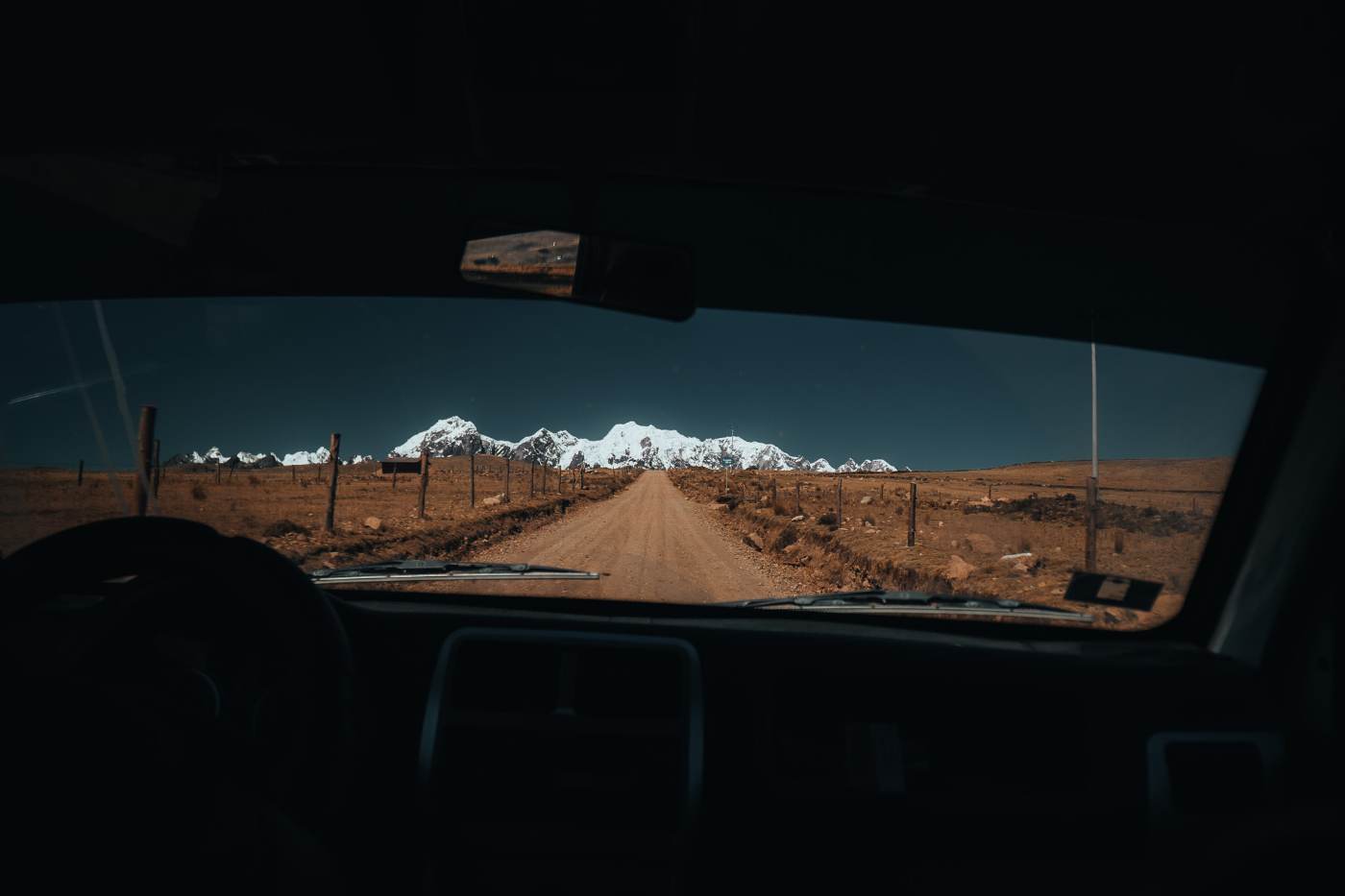
The road toward the high Andes

Take the first step on your journey today.

Tell us your dates, your group size, and the subjects you want this trip to carry. We will tailor the version that fits.

Learn more