
A conversation with one of the site’s most experienced guides and a look at the ancient city he has spent his life explaining
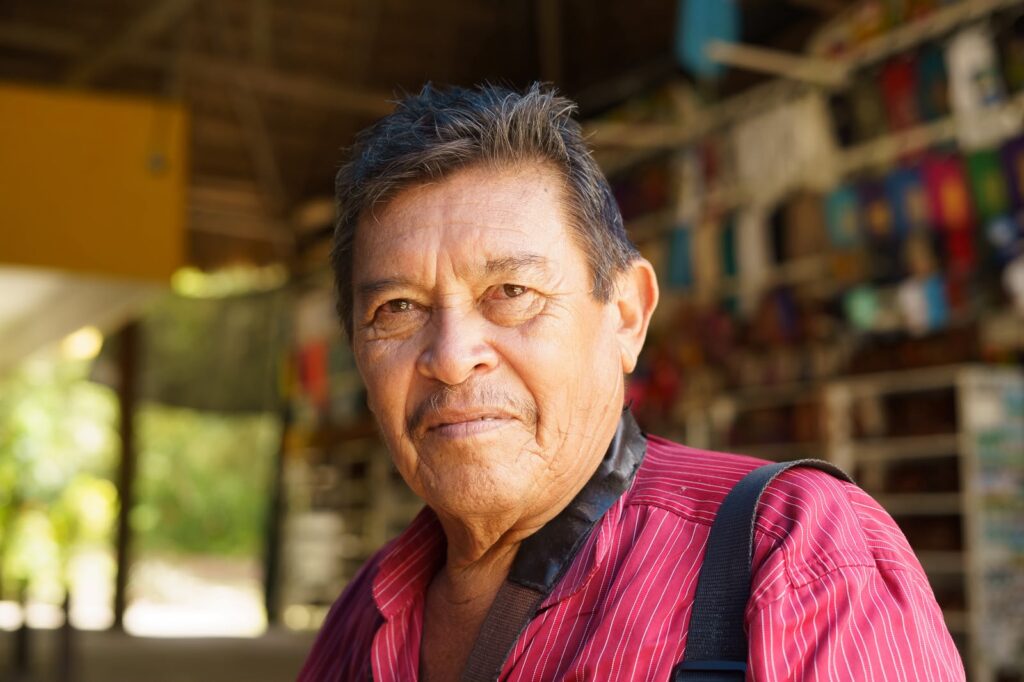
Miguel Marín has been guiding at Tikal since before the internet existed. In the late 1980s, when the only way to reach the ruins was by small plane or a long journey through the jungle, he was already there. He has led documentary crews from the BBC, National Geographic, HBO, and Discovery Channel through the site with cameras so large they needed multiple people to carry them. He guided the head of the U.S. Southern Command, the President of Mexico, and the Prime Ministers of Taiwan and Israel. He has been a guide for over 29 years.
Tikal holds the extraordinary and the ordinary in the same frame, and Miguel Marín has spent decades helping visitors understand why that matters.
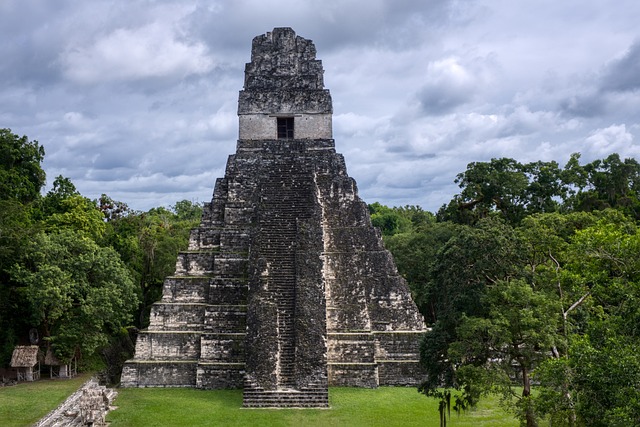
What is Tikal?
Tikal is a complex of Mayan ruins deep in the rainforests of northern Guatemala. Historians believe the more than 3,000 structures on the site are the remains of a Maya city called Yax Mutal, which was the capital of one of the most powerful kingdoms of the ancient empire. At its peak between 600 and 800 CE, Tikal reached its architectural and artistic height: a city with an estimated population of 10,000 in its core and up to 50,000 in the surrounding areas.
Tikal National Park encompasses 57,600 hectares of wetlands, savannah, tropical broadleaf and palm forests alongside thousands of architectural and artistic remains spanning from the Preclassic Period around 600 BC to the decline and eventual collapse of the urban centre around 900 AD. UNESCO designated the ruins a World Heritage Site in 1979. It is one of the few World Heritage Sites designated for both its cultural and natural significance. The ruins and the rainforest coexist.
The forest is part of the experience
The park is home to Kapok trees, the sacred tree of the Maya, alongside tropical cedar and Honduras mahogany. Agoutis, white-nosed coatis, gray foxes, spider monkeys, howler monkeys, harpy eagles, ocellated turkeys, toucans, and leafcutter ants can all be seen regularly. Jaguars, ocelots, and cougars also roam the park.
Miguel sees them. He spotted a jaguar eight months ago, not an unusual occurrence for someone who spent years living and working at the site. His Mayan nahual, the day sign assigned at birth in the Maya calendar, is Ix. The jaguar.
But Miguel is clear-eyed about what is changing. He has noticed a meaningful decline in biodiversity in the Petén region over recent years, a trend he attributes to climate change. The wildlife that defined his early decades at the site,the frequency of certain birds and regularity of particular sightings, is no longer what it was. For someone who has watched this forest for nearly half a century, he has witnessed the shift season by season.
A city’s secrets
In 2018, LiDAR technology revealed 60,000 previously unknown structures in the region, including pyramids, houses, and defensive fortifications. Some archaeologists now believe that 7 to 11 million Maya people inhabited northern Guatemala during the late Classical period from 650 to 800 AD.
Miguel begins every tour on the bus or van, before anyone sets foot on the site. He covers Mesoamerican history in sequence: who came first, who built what, what happened to them, and where their descendants are today. He wants visitors to arrive at the Great Plaza with context. “The questions,” he said. “That’s what matters most to me; that people come with questions.”
He has a personal library of over 26 archaeology books, many written by the researchers who excavated Tikal. His 26-year-old daughter, now an English-speaking guide working independently at Tikal for three years, consults them too. The knowledge is being passed on directly.
Beyond Tikal Guatemala: lesser-known sites worth visiting
Miguel’s recommendations for travelers who want to go deeper into Petén’s Maya landscape:
Yaxhá is his first choice. Located about 65 kilometers from Tikal, Yaxhá has over 500 structures, most of them still largely unrestored. Visible but still partially covered by jungle, it is one of the few major Maya sites where you can still feel the scale of what remains undiscovered.
Topoxté sits on an island in Lake Yaxhá, reachable by small boat. Miguel described it as arriving at a city built in miniature: everything the scale of a full Maya complex, compressed onto an island. Yaxhá and Topoxté can be visited on the same day.
Seibal is further afield, reached by river through dense jungle with few other tourists. It is smaller and quieter than the others.
San Miguel is another site in the Petén region that rewards travelers willing to venture off the main circuit. It offers a raw encounter with the Maya world, with structures still largely reclaimed by jungle, without the infrastructure or crowds that come with Guatemala’s more famous ruins.
Tayasal, located on the Isla de Flores in Lake Petén Itzá, holds a particular place in Maya history. It was the last independent Maya kingdom to fall to the Spanish, not conquered until 1697, nearly 200 years after the fall of Tenochtitlan. The island today is better known as the charming colonial town of Flores, the main base for travelers visiting Tikal. But beneath its cobblestone streets and painted buildings lies one of the most significant chapters in the story of Maya resistance. Walking through Flores with that history in mind changes what you are looking at.
What Miguel wants visitors to understand
After decades working at one of the most visited archaeological sites in the Americas, Miguel still believes in the questions. He still notices things like the texture of a carved stela, the way the light hits the Great Plaza at a particular hour, and the sound of howler monkeys in the canopy above Temple IV.
His daughter is at Tikal now, doing what he taught her. That, perhaps more than any single structure or historical fact, is what Tikal produces in the people who give their lives to it: the conviction that this place is worth understanding deeply and that the understanding is worth passing on.
Somos Impact Travel runs programs in Guatemala in partnership with local guides, NGO partners, and community organizations, connecting schools, corporate groups, Rotary clubs, and other donor groups with local leaders. Visit somos.travel/experiences to explore programs or start planning your group’s expedition.