
Student travel Guatemala and Belize offers something most programs can’t: direct engagement with communities and ecosystems that look nothing like home. Students come home changed in ways that take months to fully understand. The difference comes down to how well the trip was planned.
This practical guide to getting the most out of a student impact travel program in Central America is written for educators building a program in Guatemala or Belize and for parents evaluating whether to send their child on one. It covers the practical questions around safety, logistics, cost, curriculum and the less obvious ones about what makes a student group trip truly educational rather than merely well-intentioned.
Why Guatemala and Belize
Guatemala and Belize sit at the top of Central America, connected geographically and historically but strikingly different in character. Guatemala is one of the most indigenous countries in the Americas — roughly 44% of the population is Maya, and 24 Mayan languages are still spoken today. It is also dealing with some of the Western hemisphere’s most acute development challenges: the third-highest rate of chronic malnutrition in the world, deforestation in the highlands, limited access to clean water in rural communities, and a long history of marginalization of indigenous peoples.
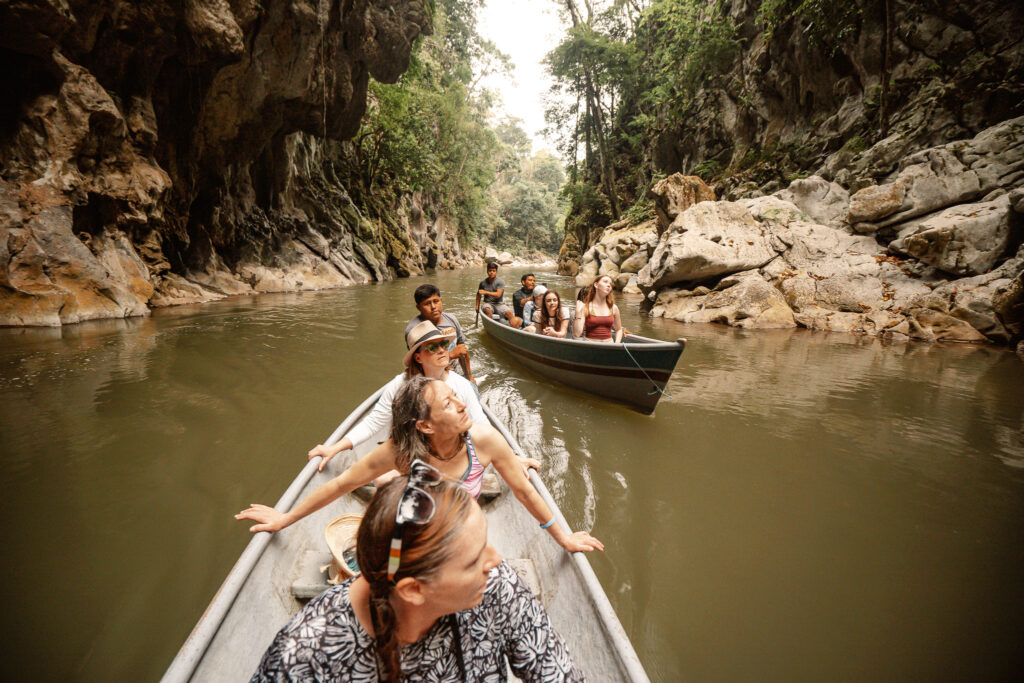
Belize, by contrast, is English-speaking, relatively stable, and home to the second-largest barrier reef in the world alongside some of the most intact tropical rainforest in Central America. It is a country where marine conservation, tropical ecology, and community-based development are all happening at a serious level, in ecosystems that are nowhere near as impacted as much of the rest of the region.
Together, they offer an itinerary that can move between a highland indigenous community, a river town, a jungle research station, and a Caribbean coastal ecosystem.
What makes a student group trip educational
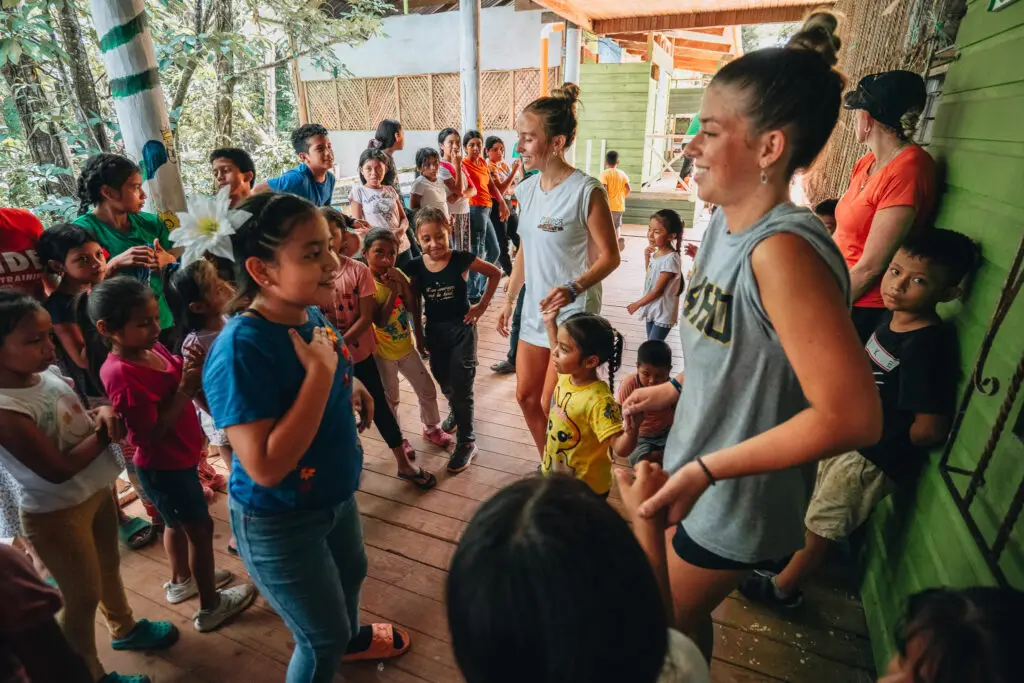
The most common mistake in student travel is treating the destination as the point rather than the context. Learning happens when students are put in situations that require them to observe carefully, question their assumptions, and engage with people whose lives look different from their own.
The organizations you visit matter more than the activities you do. A classroom renovation at a school that has been serving indigenous children for 50 years is a fundamentally different experience from a construction project organized around visiting groups. The former puts students inside a real institution; the latter creates work for the sake of having work to do.
Preparation matters. Students who arrive at a site knowing a bit about the history, language, issues, and organization they are visiting engage more deeply. Pre-departure curriculum produces measurably better learning outcomes.
Reflection is essential. What students do with the experience after it happens is as important as the experience itself. Programs that build in structured reflection time, journaling, and post-trip discussion produce students who can articulate what they learned. Programs that don’t tend to produce students who say the trip was amazing but can’t explain why.
Safety: what educators and parents need to know
Safety is the first question every parent asks and the most important thing every educator needs to have a clear answer to. Here is an honest picture of what travel in Guatemala and Belize involves.
Guatemala is a middle-income country with significant inequality and, in some areas, elevated crime rates. primarily in Guatemala City and a few other urban centers. The regions where Somos operates (Antigua, Lake Atitlán, Rio Dulce, and Petén) have their own character, their own risks, and their own rhythms. Travelers who follow basic urban awareness practices, stay with their group, and work with an experienced local operator are not at risk.
Belize is one of the safer countries in Central America for travelers, with a well-developed tourism infrastructure, English as the official language, and a stable government. The areas where Somos operates in Belize (central Belize’s jungle corridor and the northern coast) are low-risk environments for group travel.
The questions worth asking any travel operator before booking:
- What is your emergency response protocol, and who is responsible for executing it?
- What medical resources are available in the areas where we will be traveling?
- What is your staff-to-student ratio in the field?
- How many years have you been running programs in this specific region?
- Can you provide references from schools that have traveled with you?
A reputable operator will have clear, documented answers for you.
Logistics: what to expect
Getting there: Guatemala City is the main international hub, with flights from most major U.S. cities. Belize City has its own international airport. Combined Guatemala-Belize itineraries typically enter through one country and exit through the other.
In-country transportation: Most programs use private shuttle vans for road travel and water taxis where needed. Road conditions in Guatemala vary significantly; highways between major cities are generally modern and well-paved, while rural roads are more rustic.
Accommodation: Student groups typically stay in guesthouses, eco-lodges, or community-run facilities. Rooms are clean and functional but not luxurious. Part of what makes the experience valuable is students sleeping in simple conditions close to the communities they are learning from.
Food: Meals are typically local, fresh, and plentiful. Students with dietary restrictions should communicate these clearly in advance. Vegetarian options are available in most areas. The cuisine in Guatemala and Belize includes tamales, fresh fish, rice and beans, and tropical fruit. Eating at local restaurants is itself a form of community investment.
Health: Standard travel health precautions apply: travel-specific advice from a physician or travel clinic at least four weeks before departure. Malaria prophylaxis may be recommended for certain areas of Belize. Students should drink only bottled or filtered water and avoid raw vegetables washed in tap water.
Curriculum alignment: what students learn
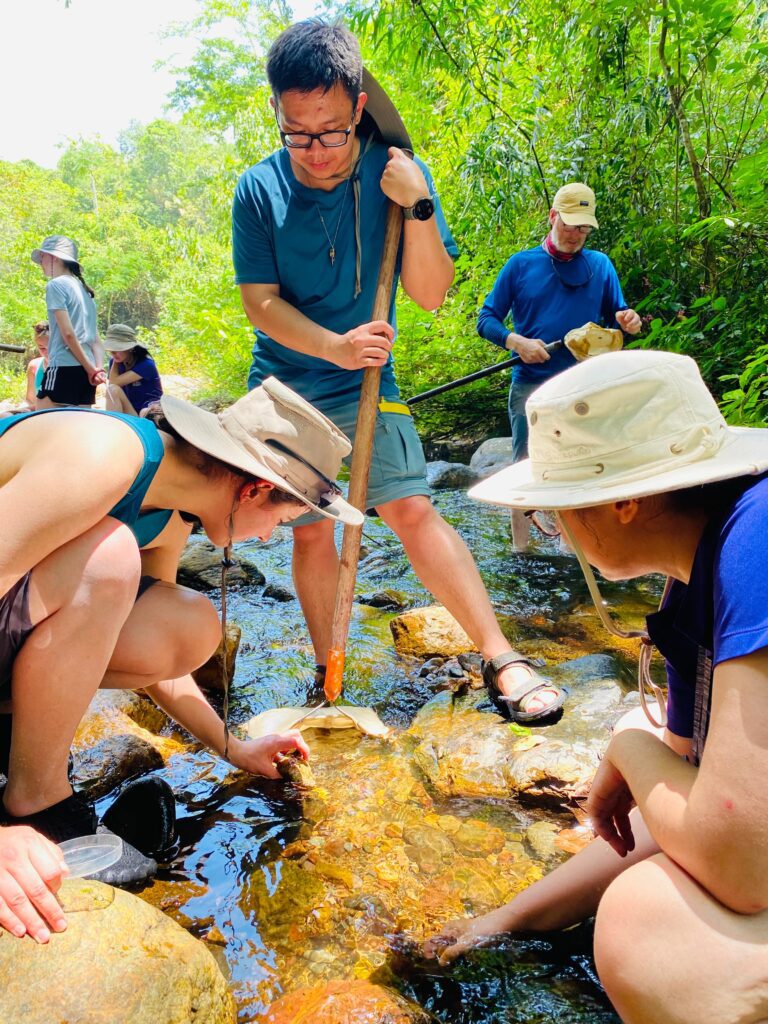
A well-designed program in Guatemala and Belize can address curricular standards across multiple disciplines simultaneously. Environmental science students working with a reforestation NGO in the highlands do fieldwork in agroforestry and watershed ecology.
History and social studies students visiting Maya ruins at Tikal are engaging with one of the most significant civilizations in the Western hemisphere.
Students working at a nutrition and food security organization are doing applied public health. Marine biology students at a field research station in Belize are learning real field methodology from working scientists.
The strongest programs are built around a central driving question, like “How do communities balance economic development and environmental protection?” The question gives students a frame for making sense of what they are seeing across multiple days and multiple contexts.
What it costs and how groups fund it
Program costs for Guatemala and Belize typically range from $2,700 to $3,500 per student for a 7 to 10-day program, including international airfare from a U.S. hub, all in-country transportation, accommodation, most meals, guide fees, and program costs. Adult trip leaders often travel complimentary, depending on the group size.
Groups may fund trips through a combination of school financial aid, family payment, and student fundraising. The fundraising process is its own educational component. Students who have raised money for their own trip engage differently than students whose families simply paid; their effort creates investment.
Some schools build the trip into a semester-long course with a fundraising and preparation component that begins months before departure. This approach produces the most educationally coherent programs.
How to choose the right operator
The operator you choose determines the quality of the program. A few things to look for:
Local presence matters. An operator with staff living year-round in the destination, with established relationships with community organizations, produces a fundamentally different program than one running trips from a U.S. office through local subcontractors.
Partner organizations matter. The NGOs and community groups your students work with should be doing ongoing work that doesn’t depend on visiting groups to function. An organization that exists primarily to receive volunteers is radically different from one that absorbs visiting groups into work it is already doing.
Educational framework matters. The best operators think of themselves as educators first and logistics providers second. They have a philosophy about what student travel should accomplish and can articulate it clearly.
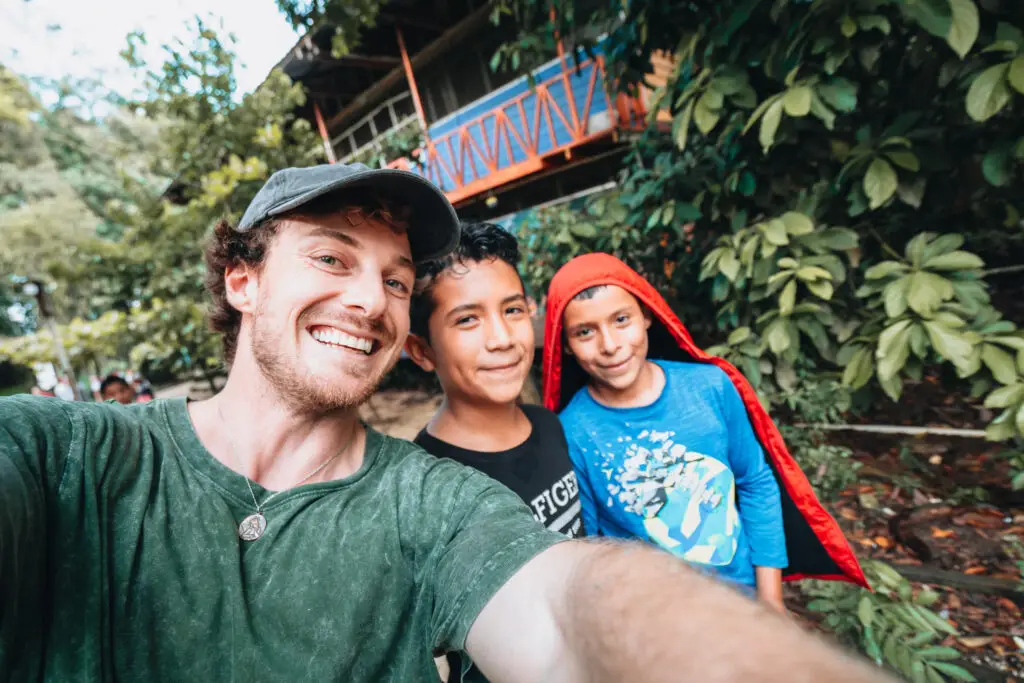
Somos Impact Travel runs programs in Guatemala and Belize in partnership with grassroots NGOs and community organizations, connecting schools, corporate groups, Rotary clubs, and other donor groups with local leaders. Visit somos.travel/experiences to explore programs or start planning your group’s expedition.