
School trip safety Guatemala standards rarely fit in a single sentence. At Somos Impact Travel, we’ve developed a set of standards covering vehicles, water, supervision, and reporting, built from more than a decade of operating in Guatemala.
School Trip Safety in Guatemala Starts Before a Student Ever Boards
Every ground transport provider, from passenger vans to the tuk-tuks used in a handful of communities where standard vehicles cannot navigate, goes through a vetting process. a minimum of two years in operation serving international groups, at least two references, an in-person vehicle inspection, and confirmation that the provider carries vehicle insurance covering passenger liability. Providers are re-vetted every season, and any provider with an unresolved incident from the prior season is placed on hold pending review.
Secure Water Transport
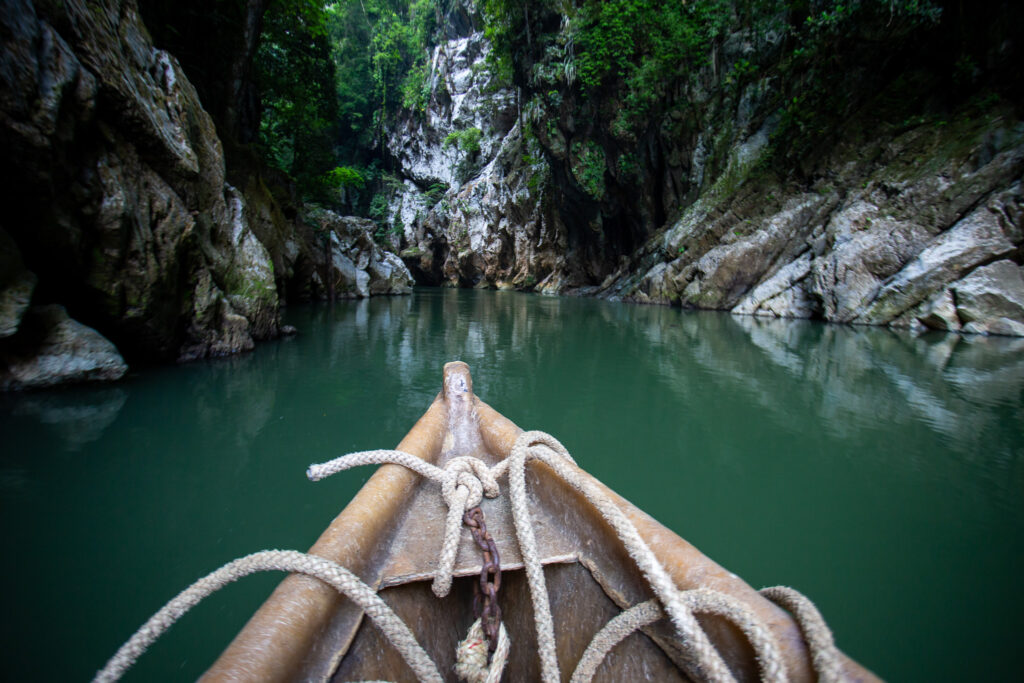
Lake Atitlán and the Rio Dulce both involve boat travel on a Guatemala itinerary. Personal flotation devices are required for every participant, regardless of swimming ability, water conditions, or how short the crossing is. Boat operators are vetted separately from ground transport providers, with a minimum of two years operating on the specific body of water and confirmed familiarity with local conditions.
The Field Educator assesses conditions before every boat departure and has the authority to delay or cancel a crossing if conditions are not safe, independent of what the day’s schedule calls for.
Supervision Standards Around Adults and Students
School trip safety in Guatemala is a question of who is supervising students and under what conditions. Somos policy prohibits one-on-one interaction between any adult and any participant outside of emergency situations, requires that all adult-student conversations happen in view of the group, and treats any boundary concern as an immediate reporting event to both the Field Educator and Somos headquarters. Zero-tolerance behaviors, including alcohol or drug use, physical violence, and any adult-participant boundary violation, trigger immediate response.
Environmental Risk and the Decision to Change Course
Guatemala’s highland programs carry environmental exposures including altitude, sun and heat exposure, vector-borne illness risk, and water quality vary by region and season. Somos briefs participants and school staff on these specific hazards at orientation, and Field Educators are trained to recognize and respond to destination-specific conditions.
That same structure covers the rare case where a program needs to change course entirely. Program suspension and early return home is treated as a last resort, reserved for situations like a serious group-wide security threat, a natural disaster affecting the destination, or a formal government travel advisory issued for that specific location during the program. When that threshold is met, Somos headquarters, the Field Educator on the ground, and the school’s own group leader assess the situation together.
What Stands Behind the Protocols
Somos carries commercial professional liability insurance covering bodily injury, property damage, and non-owned and hired auto liability at the million-dollar level, worldwide. Every participant is also required to carry independent travel insurance that includes medical evacuation coverage before departure, since a domestic policy will not cover an emergency evacuation from a highland program site.
Guides on Somos programs are bilingual and certified in CPR and first aid, and every program destination has a written emergency action plan specific to that location rather than a single generic document applied everywhere Somos operates. Since founding, Somos has run programs for more than 1,000 travelers with zero safety incidents, a record built on protocols that get reviewed and updated before every program season rather than written once and left alone.
Documentation Is Part of the Standard, Not an Afterthought
Every incident, including near misses, gets documented the same day it happens. Minor issues go into a daily trip log. Anything involving a participant’s health or safety gets reported to Somos headquarters by the end of that day, and more serious incidents require a formal report within 24 hours. After a program ends, Somos leadership reviews every incident from that trip within a week and conducts a root cause analysis on anything significant, with findings feeding directly into protocol updates before the next season runs.
That closes the loop that a lot of school trip safety pages leave open: not just what the rules are on paper, but what happens when something does go wrong, and whether the organization changes its practice in response. For a risk committee deciding whether to sign off on a Guatemala program, that closed loop, vetted transportation, defined supervision standards, insurance that covers the specific exposures of international travel, and a documentation process that produces real changes, tends to matter more than any single reassurance on its own.
Program directors weighing a Guatemala trip are welcome to request Somos’s full risk management documentation directly, rather than relying on a summary.