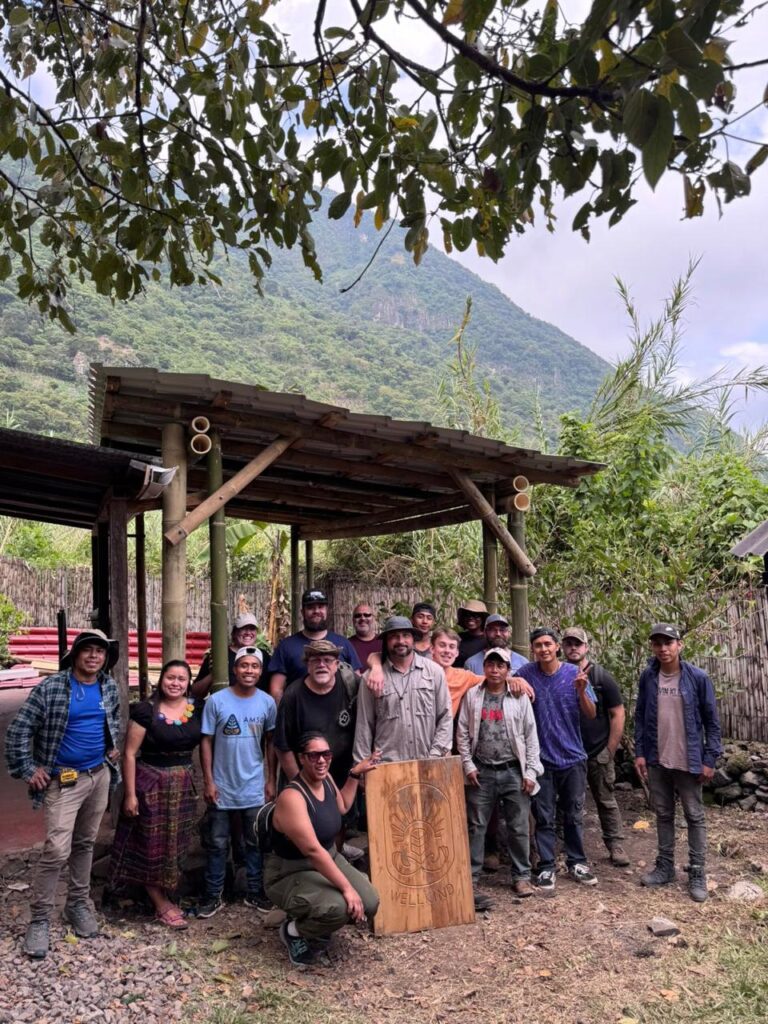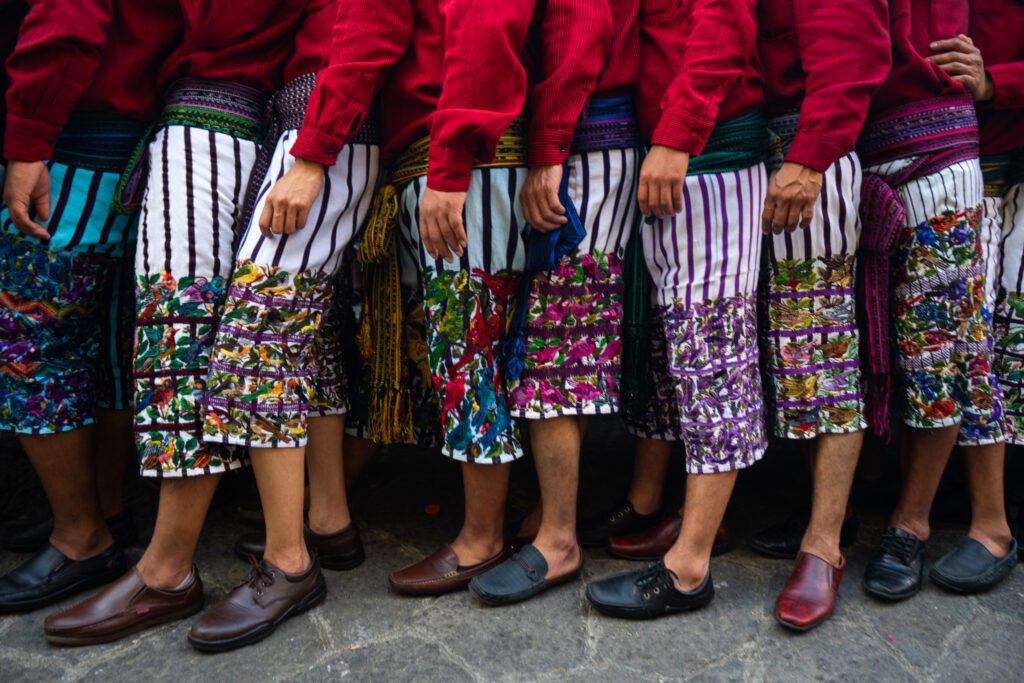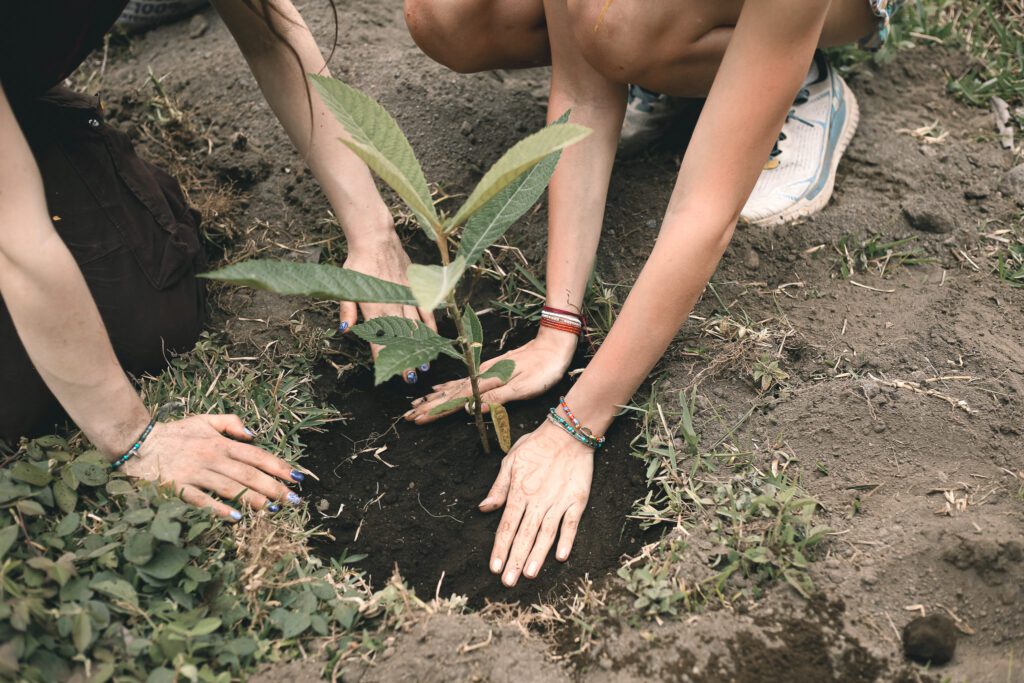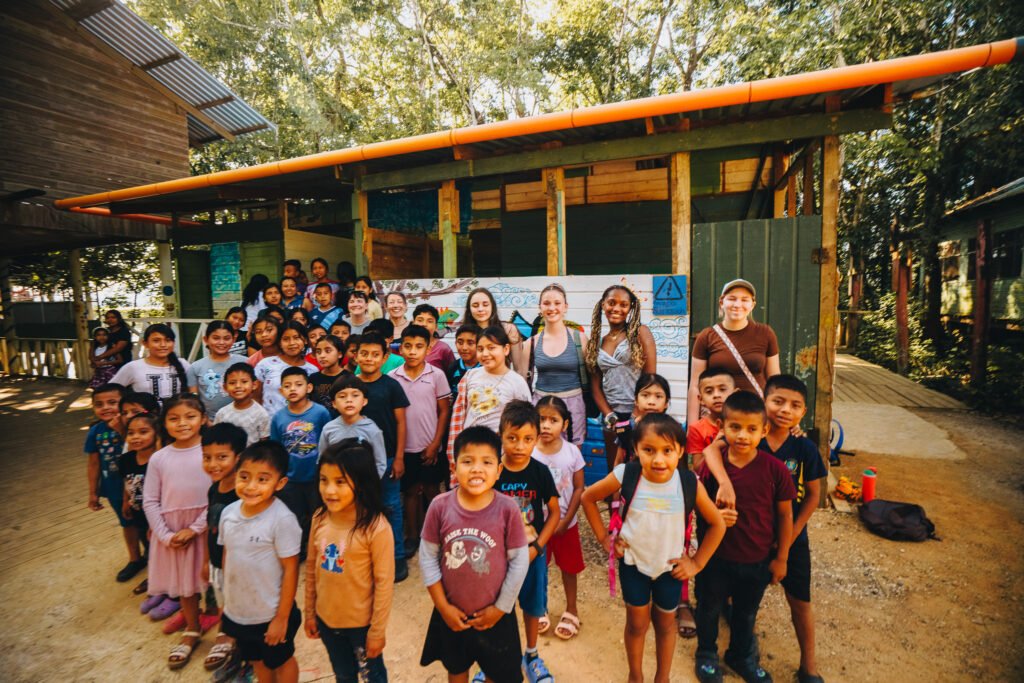

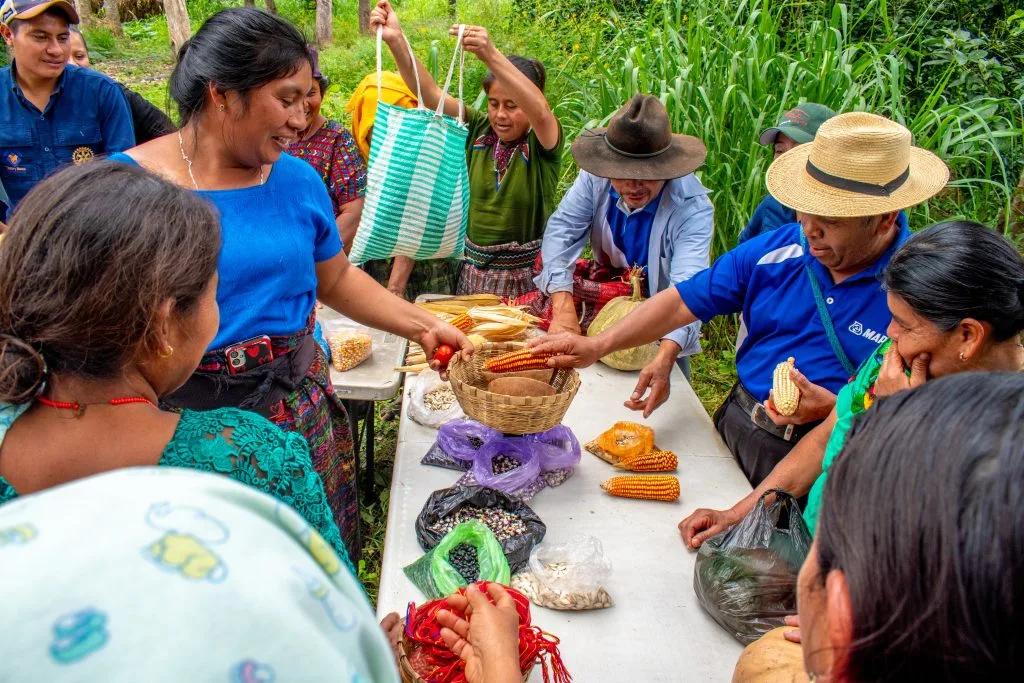
This eight day program takes a Rotary donor group directly into Rabinal, Baja Verapaz, the heart of Achí Maya territory in Guatemala, before any time in Antigua. The group spends four full days alongside Voces y Manos, working with the farming families and grassroots organizations rebuilding food systems and community institutions in a region still living with the legacy of the early 1980s massacres.
The program is anchored around agroecology, historical memory, and community partnership, structured through visits to model farms, family plots, a local school, and Rabinal’s own heritage museum. It then extends outward through the Biotopo del Quetzal cloud forest reserve and Antigua’s coffee economy and colonial core, giving the group a fuller picture of the country the Rabinal communities are part of.
What does it take for a community to keep growing its own food, and its own history, on its own terms?
Visitors understand why this program places direct relationship with the Achí community ahead of any time in a tourist destination.
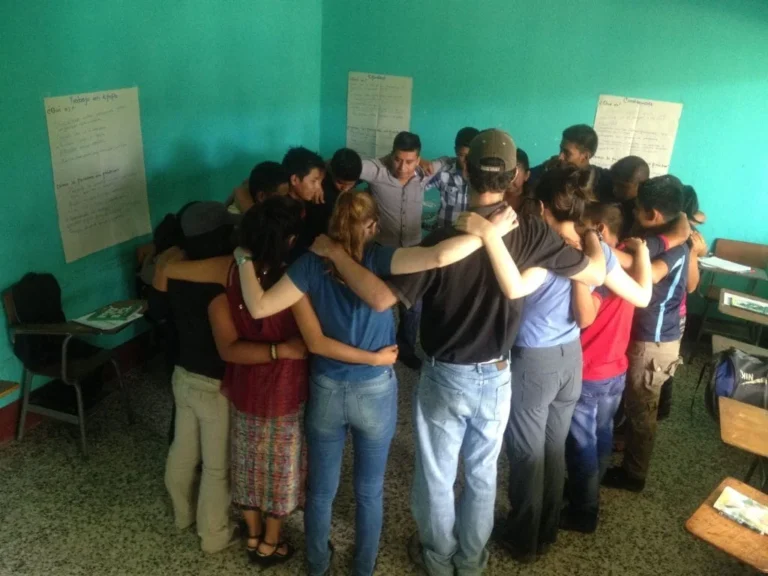
Visitors understand how Voces y Manos fits within a wider network of Achí grassroots organizations, rather than operating alone.
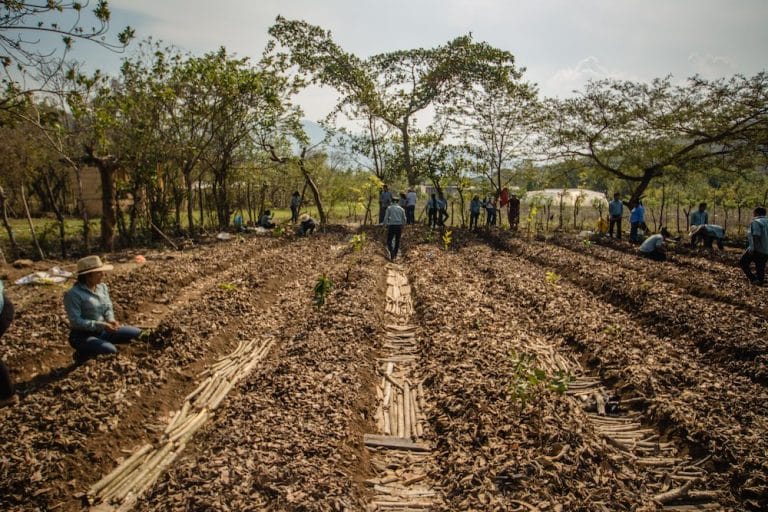
Visitors understand that agroecology in this region is a set of shared principles applied differently by each family, not a single fixed method.
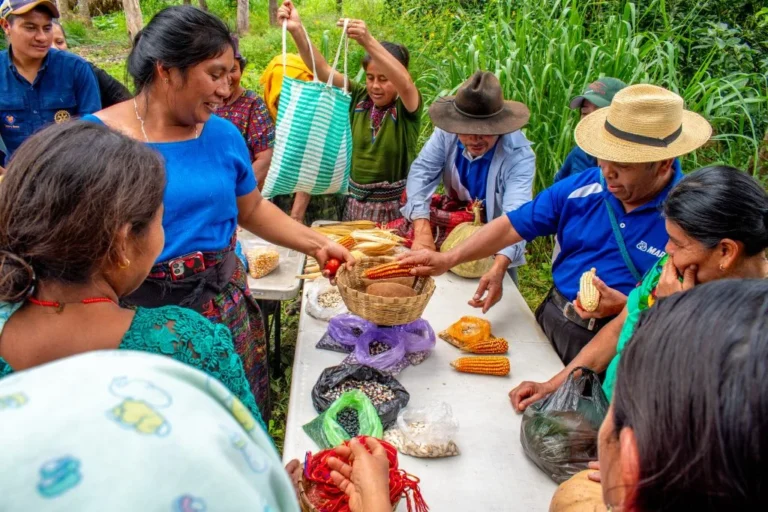
Visitors understand how a community chooses to narrate its own history, and what that choice means for how outsiders receive it.
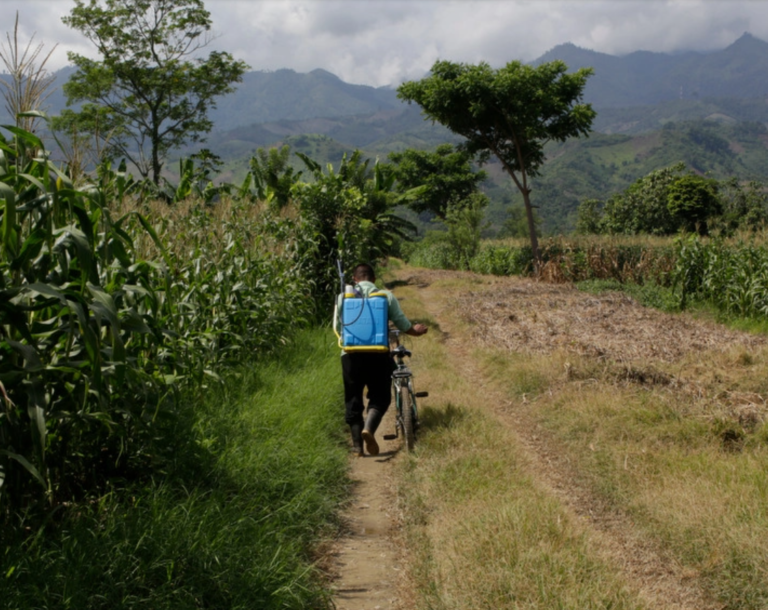
Visitors understand how conservation access and farmland use get negotiated side by side in a working cloud forest reserve.
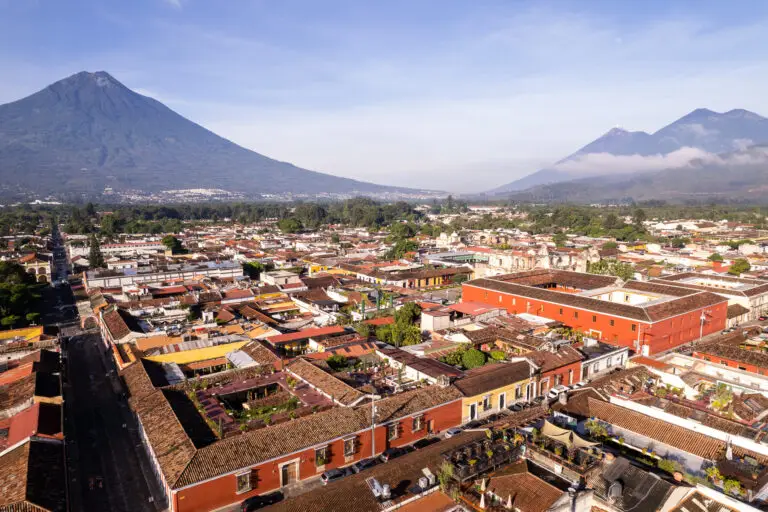
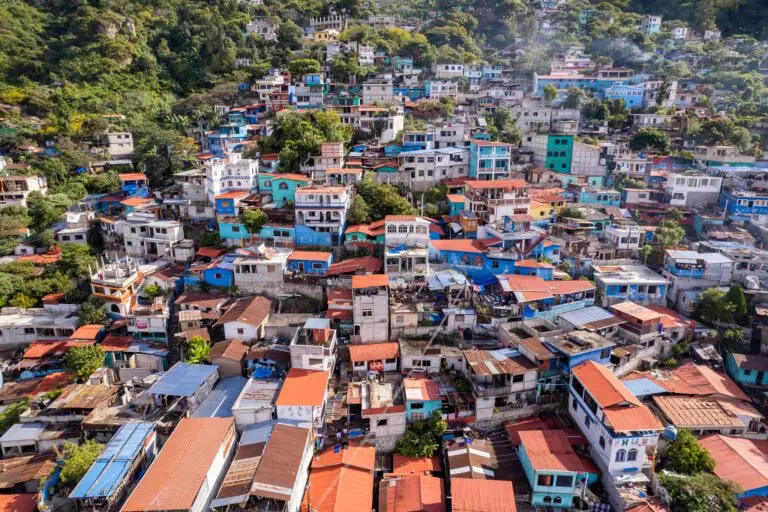
Visitors understand how the volcanic highlands and colonial economy of Antigua connect to the farmland and food systems seen all week in Rabinal.
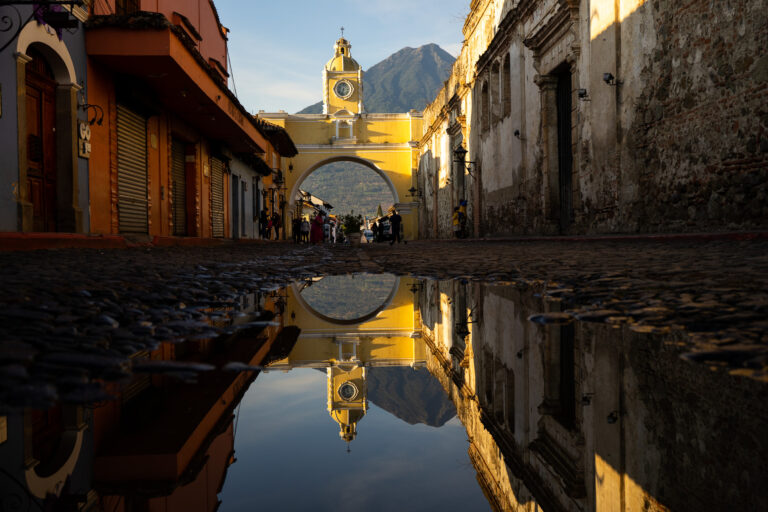
Visitors understand how the same volcanic soil discussed all week in Rabinal shapes Antigua's coffee economy and colonial history.
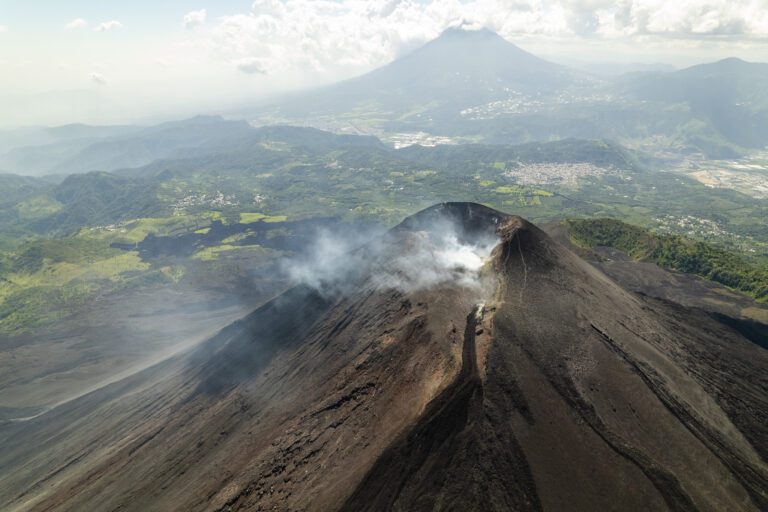
Visitors leave understanding their connection to Voces y Manos and the Achí communities as an ongoing relationship, not a completed itinerary.
Voces y Manos and its partner network, including Qachuu Aloom and the Asociación Campesina Río Negro, gain a direct funding relationship built into the cost of the trip itself, alongside a Rotary group that understands their work firsthand rather than through a report. Participants leave with an understanding of how agroecology, historical memory, and long-term partnership function together in one Achí community, and carry home a working answer to what sustained, community-led support actually looks like.
Student outcome: Visitors understand how one organization sustains agroecological training, school programming, and historical memory work as parts of the same long-term commitment to a community, rather than as separate projects.
Voces y Manos is based in Rabinal, in the heart of Baja Verapaz, where it works with Maya-Achí farming families to protect traditional agriculture, train the next generation of farmers, and strengthen food security and health outcomes across the region. Its work sits inside a wider network of grassroots organizations working the same territory, including Qachuu Aloom, known for its seed conservation work, and the Asociación Campesina Río Negro, formed by survivors of the massacres carried out against Achí communities in the early 1980s.
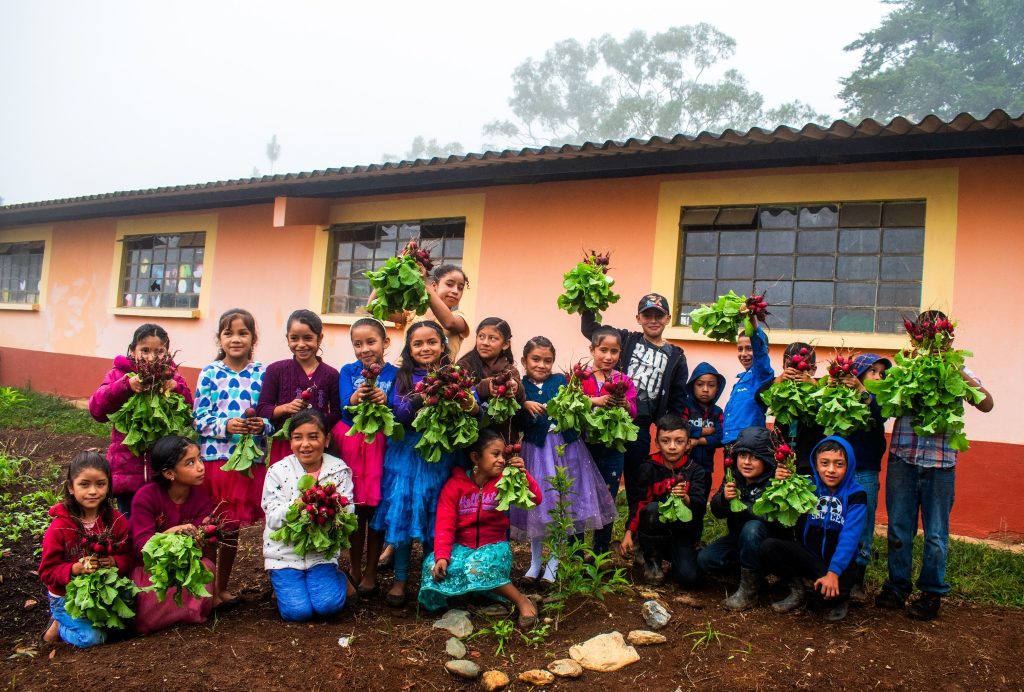
Over four full days, participants tour a model agroecological farm and its seed house, visit family plots in the lower valley to see how the same techniques adapt to different land and households, cook alongside children at a local school, and learn the region's history at Rabinal's heritage museum. That museum's account of the 1982 massacres at Río Negro and surrounding communities is told from within the community that survived them, and Voces y Manos presents it to visitors on those terms, with framing before and space for processing after.
Access to this network exists because of a direct, ongoing relationship, not a booking made for a single trip. The $500 contribution built into the program cost supports the same farm infrastructure, school programming, and museum operations the group sees firsthand, giving a Rotary donor group a working answer to how their support actually functions on the ground.
Lens of inquiry question: What does it look like for a donor relationship to sustain a community's own work over years, rather than fund a single visible project and move on?
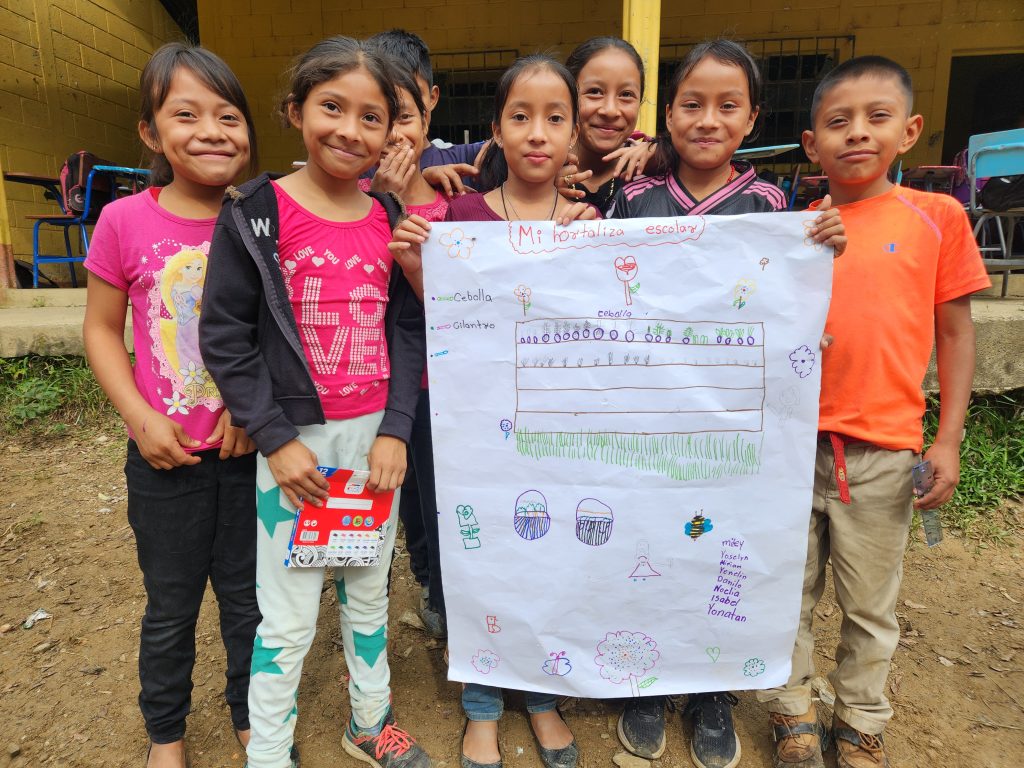
The way people live in Guatemala is much different than in Idaho. Immersing myself in their country taught me to appreciate the little things more.
Somos Impact Travel exists to be a bridge. We connect schools, service groups, and companies with the local leaders and grassroots organizations already doing the real work of solving global problems across Latin America, in conservation, education, agriculture, and community development.
Too often, students and travelers leave a place moved by what they saw, carrying stories and photos home, while the communities that hosted them stay exactly where they were. The relationship never has time to form. Somos was built to close that gap.
Our model is different by design. Students do not come to help. They come to learn from people who know things they do not. Our NGO partners and community leaders are the teachers and the protagonists of every program, never the supporting cast. That is a structural choice, not a marketing line.
Somos was founded by educators and travel leaders who spent decades living and working alongside these communities throughout Central America and Peru, and who saw firsthand what was missing from traditional travel models.
Every program is built on a deep commitment to safety, with rigorous planning, vetted in-country partners, and clear protocols behind every trip we run.
The communities we work with do not need visitors to save them. They need advocates who listen, partners who return, and students who go home with a real understanding of what is at stake, and what is working.
Every Somos program runs on protocols developed and refined across 10+ years of operations. Safety is what makes everything else possible
Every vehicle used in a Somos program is operated by a vetted, licensed, and insured provider with documented experience transporting student groups.
Safety protocols are location-specific. Jungle environments, high-altitude environments, water transport, and remote research stations each have dedicated protocols refined through a decade of in-country operations.
The land program is priced at $1,995 per person, and does not include international airfare. That figure already carries a $500 direct contribution to Voces y Manos, built into the cost rather than added as a separate donation ask. Pricing is structured for a Rotary donor group traveling together on fixed January 2027 dates, with final group size confirmed with Somos and Voces y Manos ahead of departure.
Deposit A deposit of $500 per traveler secures your dates and confirms partner availability. The deposit goes toward your total program cost and is fully refundable within 30 days of booking. After 30 days, it is non-refundable. If you book within 60 days of departure, full payment is due at the time of booking.
Full payment Full payment is due 60 days before departure. Payment may be made in full at any time, or a monthly payment plan may be arranged during onboarding. All plan milestones and deadlines are confirmed at that stage.
Cancellation To cancel, notify Somos at team@somos.travel. Refunds are calculated from the date notice is received, excluding the deposit in all cases.
Your deposit, honored for life Your deposit is non-refundable, but it never expires. It may be applied to any future Somos program at any time. We stand behind this because we intend to be your travel partner for the long term, not just for one trip.
Trip confirmation In the event Somos is unable to run a program due to insufficient enrollment, you will receive a full refund of all payments including the deposit.
Force majeure In the event Somos is unable to provide the program due to circumstances beyond its reasonable control, including acts of God, war, terrorism, civil unrest, or pandemic, Somos reserves the right to reschedule the program or provide a full or partial refund of payments made, excluding the $500 deposit, at its sole discretion.
Somos strongly recommends comprehensive travel insurance for all participants. Many policies cover cancellation costs in circumstances that fall outside these refund tiers.
The Guatemala program is built to support experiential education models, environmental science and social studies curricula, and global competency frameworks. It has been custom-designed for Gould Academy's Four Point framework and adapts readily to IB, AP Environmental Science, and school-specific immersion or global citizenship requirements. During the design phase, Somos works directly with your faculty to identify specific learning standards the program can map to.
Somos recommends a minimum of one adult for every five students. For groups of 10 or fewer, two adult leaders are standard. Somos guides are present at all times during activities, with lead guide and assistant guide coverage built into every day.
Every guide team carries a comprehensive medical kit and holds current CPR and first-aid certification. Somos maintains 24/7 in-country emergency communication, and every program location has a documented emergency action plan. Guatemala City's main hospital network is within range of all program sites for serious emergencies. For wilderness and field locations, evacuation protocols are prepared in advance and rehearsed by guide staff.
A signed agreement and deposit secures your dates. The program can be designed and refined well ahead of the commitment deadline, which allows schools to complete internal approval processes before financial commitment is required. See the payment and cancellation section of this page for full terms.
Yes. Every Somos program begins as a starting point, rather than a fixed product. Somos works with faculty and program coordinators to align activities, discussion frameworks, and field site selection with your school's specific academic and experiential goals.
Yes. The Guatemala program is designed for students at all levels of international experience. Guide support is present throughout, the pace is deliberate, and the program structure gives students time to orient at each new location before the next challenge. Students who have never left the country routinely describe the program as the right level of stretch.
Moderate. Participants should be comfortable walking several miles on uneven terrain, including cobblestone streets, forest trails, and hillside farmland. The Volcán Pacaya hike is a moderate 1.5-hour ascent and is the most physically demanding activity on the itinerary. Students who are reasonably active and in good health should have no difficulty. There are no running or climbing requirements.
Somos uses WhatsApp for in-country group communication, and most program accommodations have reliable Wi-Fi. Students are typically able to reach home every evening, though connectivity may be limited at certain locations. Somos provides parents with a daily communication framework before departure so expectations are clear on both sides.
Yes. Vegetarian, vegan, gluten-free, and common allergy requirements are all routinely managed. Somos coordinates with every accommodation and community partner in advance. Please note dietary needs on your registration form so they can be confirmed with all sites before arrival.
Homesickness is common in the first few days of international travel and is treated as a normal part of the experience. Somos guides are trained to check in with students individually, and the daily reflection structure provides a supported space for students to name how they are feeling. Group leaders are always informed. For persistent or serious distress, Somos coordinates directly with parents and, if needed, with the school's counseling team.
A budget of 100 to 150 US dollars comfortably covers independent meals noted in the itinerary, souvenirs, and personal purchases. Tips for guides and drivers are optional and appreciated; Somos recommends budgeting an additional $20 to $30 if families wish to offer tips.
• Lightweight pants or travel trousers (2–3 pairs)
• Short-sleeve shirts (4–5)
• One light fleece or zip-up jacket (Atitlán evenings are cool)
• Comfortable walking shoes with ankle support
• Sandals for guesthouse and casual use
• Underwear and socks for full duration
• Rain jacket or packable poncho (March can bring afternoon showers)
• Sturdy closed-toe shoes or trail runners (not sandals)
• Sun hat or cap with brim
• Sunscreen, SPF 30 or higher
• Insect repellent with DEET
• Lightweight daypack or dry bag
• Reusable water bottle (minimum one liter)
• Field journal and pens (provided by Somos, but bring your own if you prefer)
Community visits and cultural sites: Covered shoulders and knees required for church entries and some community visits One pair of nicer casual clothes for welcome and farewell dinners Bathing suit and small towel (Quixayá has a spring-fed swimming pool)
Optional: Binoculars (useful at Atitlán and reforestation sites) Camera or GoPro Small padlock for hostel lockers Headlamp or small flashlight
Documents and essentials: Passport (valid at least six months beyond return date) Printed copy of travel insurance Emergency contact card Any required prescription medications with original labeling Copy of vaccination records if applicable
Every Somos program begins with a conversation. Tell us about your school, your students, and what you want them to leave knowing.