A conversation with Antonio Canel Sipac, Executive Director of Wellkind Guatemala
In the western highlands of Guatemala, the reforestation program run by Wellkind moves on the rhythm of the rainy season. When the clouds gather and the soil softens, Wellkind’s reforestation teams spring into action. Timing is key since trees planted in dry ground do not survive. Everything Wellkind does is built around this biological reality and the communities who understand it best.
After working for several years as Wellkind’s ecology program manager, Antonio Canel Sipac was appointed the executive director in 2025. He was one of the first students in his community to graduate, studied business administration, and runs his own honey business alongside his work at Wellkind.
In 2024, the Wellkind team planted over 30,000 forest and fruit trees across the western highlands. In a recent interview, he walked through exactly how that happens, from first contact with a community to the final monitoring visit months later.
The picture that emerges is of a reforestation program that is more deliberate, relational, and technically sophisticated than most people would expect from a small NGO working in rural Guatemala.
Starting with the community
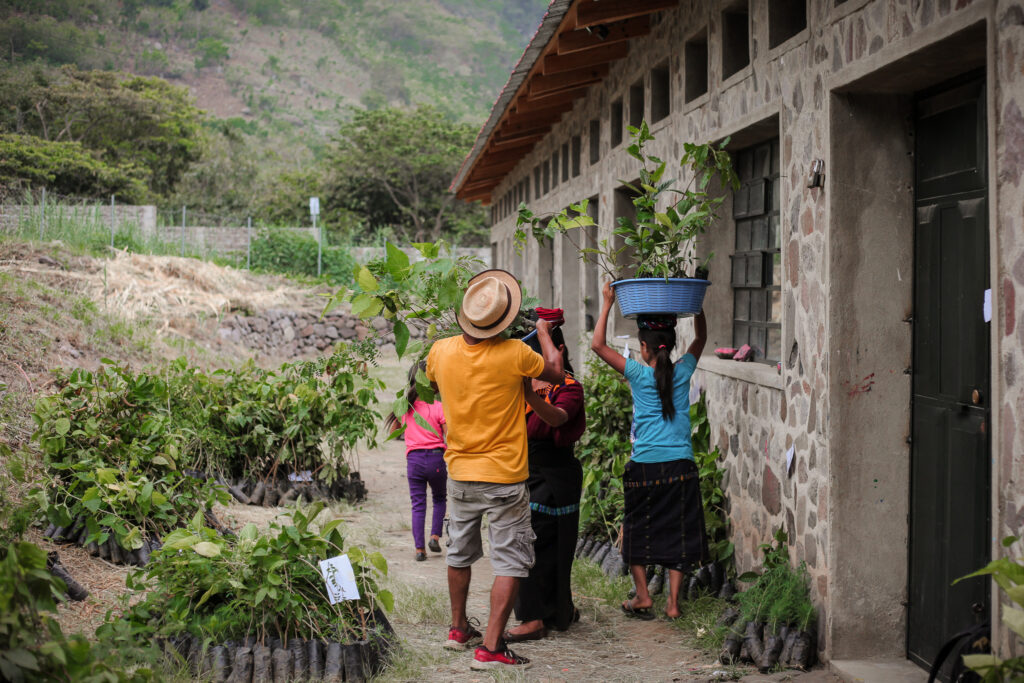
Before a single tree goes into the ground, Wellkind spends significant time building relationships. The process begins by identifying the target community based on the project proposal, then establishing contact with local leaders: cocodes (community development councils), auxiliary mayors, and municipal offices. Wellkind’s Guatemala reforestation program prioritizes sites near freshwater springs and communal land, where tree cover has the greatest ecological impact.
“This first approach is crucial,” Antonio explained. “It allows us to understand the local culture and dynamics, and to make sure the community knows who Wellkind is and that we are a transparent organization.”
From there, Wellkind works with municipal environment offices to assess what resources exist and where the organization can intervene in a complementary way. Priority sites include communal water sources and freshwater springs, where reforestation has the highest ecological impact. Approximately 30% of Wellkind’s planting happens on public land near these critical resources.
Families who want to participate register through community meetings, presenting identification and land details. A technical team then visits each plot to evaluate its planting capacity, adjusting the number of trees based on existing vegetation and land conditions.
The technical backbone of Wellkind’s Guatemala reforestation program
After site evaluations, the team takes GPS coordinates at every participant’s land and feeds the data into ArcGIS to produce detailed maps. These maps allow Wellkind to plan distribution logistics precisely and provide donors with documentation showing exactly which species were planted, at which locations, and with what results.
The rainy season calendar governs when planting happens. Most reforestation sites in the highlands have no irrigation infrastructure, so trees must go into the ground when natural moisture can sustain them. This constraint shapes the operational calendar and is one reason why Wellkind’s survivability rate runs between 80–90%, a figure Antonio cited with pride, and with honesty about what the remaining 10–20% teaches the team.
“The small margin of failure helps us analyze results, improve our strategies, and measure the effectiveness of each project,” he said. “We are always open to feedback, suggestions, and complaints. Every challenge is an opportunity to grow.”
Agroforestry: trees that feed families
Alongside the Guatemala reforestation program, Wellkind runs an agroforestry initiative that has proven more readily embraced by participating families. The difference is practical: rather than planting only native forest trees on land set aside for conservation, agroforestry integrates fruit trees like mandarin, lemon, orange directly into existing plots where families grow corn and beans.
The result addresses two problems at once. The trees protect soil and water. The fruit feeds families and can be sold at local markets. Antonio noted that this dual benefit makes the agroforestry program easier to sustain long term, as families have a direct, tangible reason to maintain the trees on their land.
The model fits the reality of highland land use. Families typically do not own large parcels they can dedicate to conservation. They farm small plots they depend on for food. A program that works within that reality gets maintained.
Education as the long game
Wellkind treats environmental education as a priority. It is certified by Guatemala’s Ministry of Education to deliver curriculum in elementary, middle, and high schools across the region. Antonio is deliberate about why the focus falls on young people.
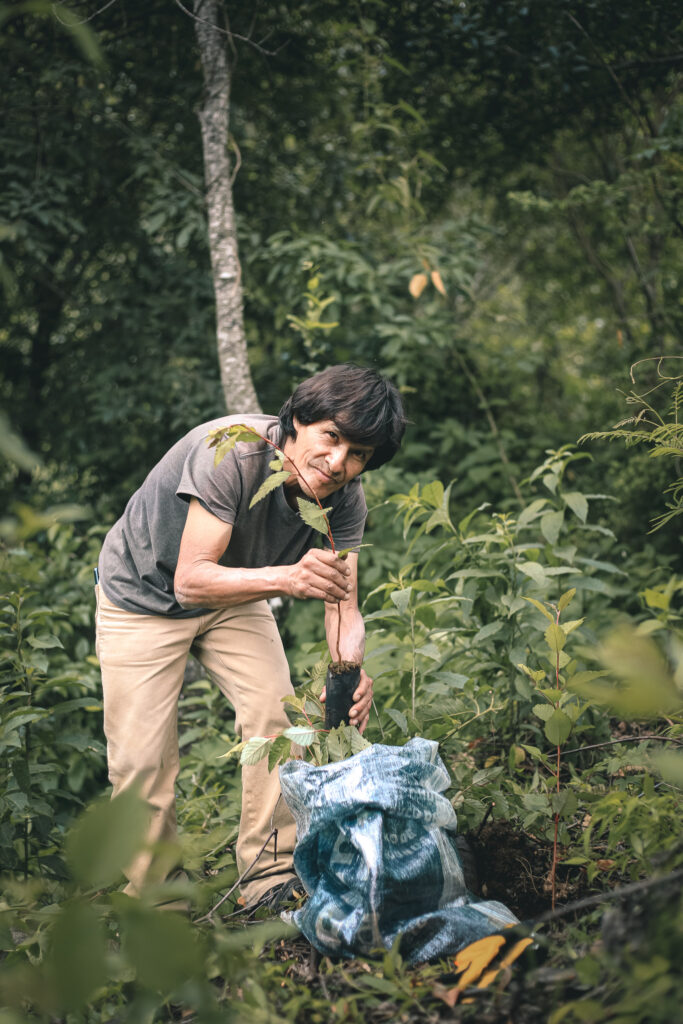
“Working with youth is more effective because their mindset is more flexible for adopting environmental values,” he said. Fifth and sixth grade students are invited to participate in community reforestation events, planting trees alongside families and learning firsthand why the watershed above their village matters.
The long-term goal is a cultural shift. Communities where families produce their own trees for replanting. Illegal logging of communal and protected areas decreases because people understand what is at stake. The next generation of highland residents will see forest protection as part of their identity rather than an outside imposition.
What visiting groups experience
When a Somos group arrives at Wellkind during the rainy season, they plant trees at community sites alongside local families and students. During the dry season, groups visit the nursery, learn the production process, and participate in entrepreneurship training sessions where community members are coached on selling surplus seedlings to generate local income.
Michelle Fajkus, a retreat group leader, described the nursery work as one of the most genuinely connective experiences she has witnessed. Last January, she and her yoga students filled soil bags alongside Mayan women in the Wellkind nursery, in a setting where the work is real and the expertise belongs to the people who have been doing it for years.
That exchange, Antonio said, is part of what Wellkind is building toward: a highland landscape with better forest cover, protected water sources, and communities that know they built it themselves.
Somos Impact Travel runs partnership-based learning expeditions across Guatemala, Belize, and Peru, connecting schools, corporate groups, Rotary clubs, and other donor groups with local NGO leaders. Visit somos.travel/experiences to explore programs or start planning your group’s expedition.