How one organization is combining indigenous land knowledge, conservation science, and community ownership to lead reforestation in Guatemala’s western highlands
The western highlands of Guatemala are among the most visually stunning landscapes in Central America. They are also among the most ecologically stressed. Decades of deforestation driven by agricultural expansion, fuel-wood cutting, and land fragmentation have stripped hillsides that were once forested, destabilizing watersheds, reducing biodiversity, and threatening the water and food security of the Indigenous Mayan communities who have lived here for generations.
Wellkind was created to address that problem through community-led reforestation in Guatemala’s western highlands.
How it started
Shad Qudsi’s background is rooted in environmentalism, gardening, and natural resources, and his first project in Guatemala was Atitlán Organics farm, which encompassed a decade-long learning process about the highlands, the land, and the communities that depend on it. He studied, taught permaculture courses, and worked in microscale food production before switching over to a service model that would allow him to have greater community impact than any enterprise could.
Wellkind took shape in 2019, when a former student approached Shad and offered to fund environmental work in the region. That donor became a “funder of last resort,” someone who provided a budget for the first two years so the organization could get off the ground without immediately having to focus on fundraising. Wellkind officially became a registered Guatemalan non-governmental organization (NGO) in 2020.
From the beginning, the approach was research-first. Rather than arriving with a predetermined program, Wellkind spent its early period speaking with hundreds of community members across the lake and highlands to understand what people needed and wanted. The result was a broad initial portfolio: family gardens, art classes, nutrition training, environmental education, and an artisan handicraft initiative supporting indigenous women.
Some of those programs worked; others were eventually culled.
Narrowing the focus
Family gardens proved impractical in the mountainous highland communities where land was scarce and often located far from homes. Nutrition training was implemented with success but eventually wound down. The artisan initiative proved durable; a group of women still produces fair-trade wholesale crochet crafts for export today.
Over time, Wellkind recognized it was spread too thin. The team began to evaluate every program against three questions:
- Is the community interested?
- Does our team have the skills and passion for it?
- Is there funding available?
The intersection of those three factors was environmental work. Communities across the lake and highlands named water and food security as their primary concerns. Trees were at the center of both. Starting in 2021, Wellkind went deep on reforestation.
Reforestation in Guatemala: what Wellkind does on the ground
Wellkind operates four interconnected programs: reforestation, agroforestry, environmental education, and a native seed bank. They are four components of a single integrated approach to restoring the highland landscape.
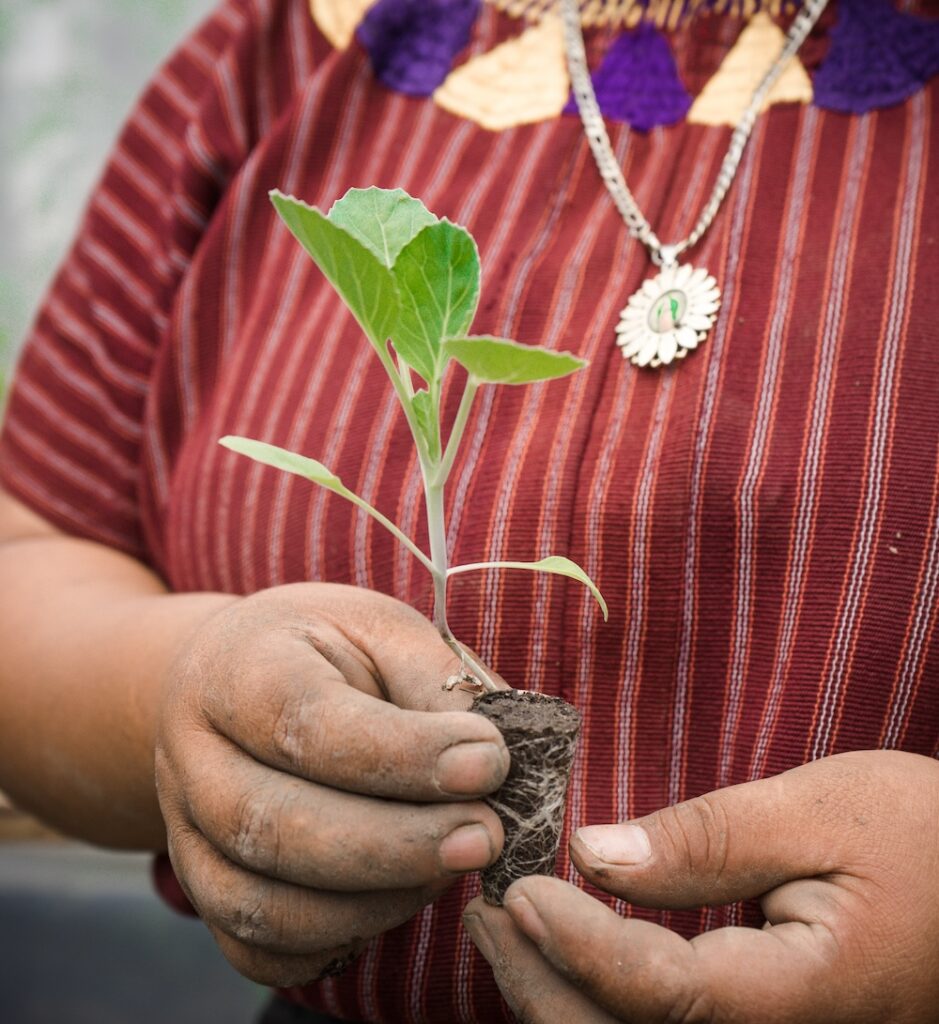
The reforestation program works by identifying families willing to reforest their land or diversify their fields with native trees. Within those communities, Wellkind identifies a smaller group willing to manage a community nursery, growing plants to sell locally and back to Wellkind for future planting drives. Every site is mapped using ArcGIS and satellite imagery, and survivability of planted trees is tracked over time. Approximately 30% of Wellkind’s reforestation work happens on public land, often near freshwater springs, where tree cover has the highest ecological impact.
The native seed bank exists because reforestation done wrong can cause as much harm as deforestation. Planting non-native species disrupts local ecosystems, reduces biodiversity, and fails to support the soil and water cycles that indigenous species have sustained for centuries. Wellkind collects and preserves native seeds from the highland region to ensure that what goes into the ground belongs there.
Agroforestry extends the work into the fields where highland families grow food. Wellkind trains families to integrate native trees into their plots, providing shade, preventing erosion, improving soil health, and diversifying income over time. For a family that participates, the changes are gradual but cumulative: better soil, more stable water access, and increased land value over time.
Wellkind is now officially certified by Guatemala’s Ministry of Education to deliver an environmental curriculum in public schools across the region. It focuses on foundational connections: trees and water, nature and public health, the sources of food and what threatens them. The goal is to shift how young people in these communities value the land around them.
To date, Wellkind and its community partners have planted over 200,000 native trees.
Blending two kinds of knowledge
Wellkind deliberately integrates traditional Mayan land-use practices with modern, data-driven assessment tools. Communities in the western highlands have been cultivating this land for centuries, so they know which plants grow where, which soils hold water, and which slopes are vulnerable. Wellkind treats that knowledge as a key resource.
At the same time, the organization uses ArcGIS mapping, satellite imagery, and survivability tracking to build a data picture of what is working and where. The combination produces something neither approach could achieve alone: conservation work that is ecologically sophisticated and community-owned. Wellkind creates the conditions for indigenous Mayan knowledge to translate into measurable, funded, lasting impact.
What visiting groups experience
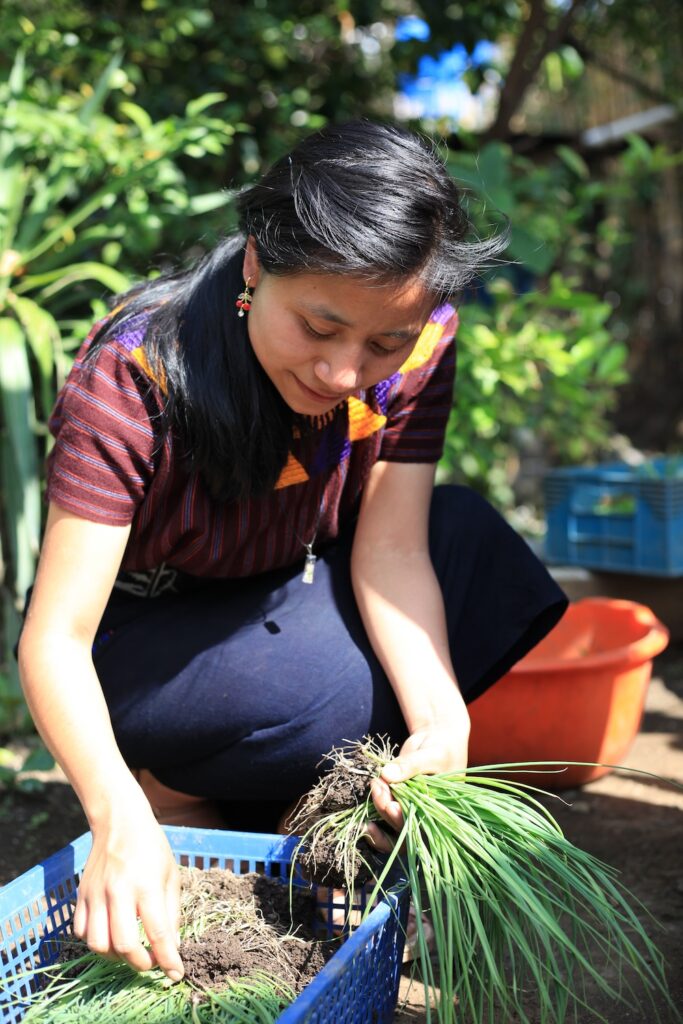
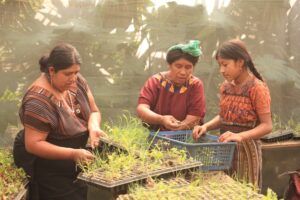
When a Somos group visits Wellkind, the day is built around meaning work for the organization. Groups meet the Wellkind team for a presentation on the programs and current initiatives, then move into hands-on activity: filling soil bags at the community nursery alongside the Mayan women who run it, planting seedlings at a reforestation site, or supporting a community tree-planting day.
The nursery work tends to leave an impression. Filling soil bags alongside indigenous women who have been doing this work for years has a way of dissolving travelers’ assumptions about who holds expertise and what expertise looks like.
Groups with students studying data science or computational biology have an additional avenue: Wellkind is actively seeking people who can help analyze and visualize the organization’s mapping and survivability data.
The road ahead
Wellkind is simultaneously pursuing two long-term visions.
The first is the Wellkind Learning Center. The organization owns land strategically located between two schools in the Tzununá, Lake Atitlán, and the long-term plan is to develop it into a full environmental education center with comfortable spaces, sample food forests, demonstration gardens, and a resource hub for both the community and visiting groups.
The second is economic sustainability through a new initiative called RISES, an acronym for Redes Agriculturas Incentivo Zonas Forestales (agricultural network forest area incentive). The Guatemalan government maintains a fund intended to pay small landowners for engaging in forestry and conservation work. In practice, most of that money is captured by large landowners who know how to navigate the bureaucratic requirements. Rural Mayan families, who are the people the program was designed for, seldom access it.
RISES is designed to change that. Wellkind enrolls families in the government program, handles the technical requirements on their behalf, and takes a consulting fee from the first year’s incentive payment, which then funds enrollment of new families. Over time, the model trains and funds local engineers to carry the work forward without continued reliance on outside philanthropy. The first 10 families are already in the pipeline.
Wellkind is a Somos Impact Travel partner in the western highlands of Guatemala. Groups traveling with Somos can spend a day at the Wellkind nursery, participate in community reforestation drives, and meet the team behind one of the most innovative conservation programs in the region.
Somos Impact Travel runs partnership-based learning expeditions across Guatemala, Belize, and Peru, connecting schools, corporate groups, Rotary clubs, and other donor groups with local NGO leaders. Visit somos.travel/experiences to explore programs or start planning your group’s expedition.