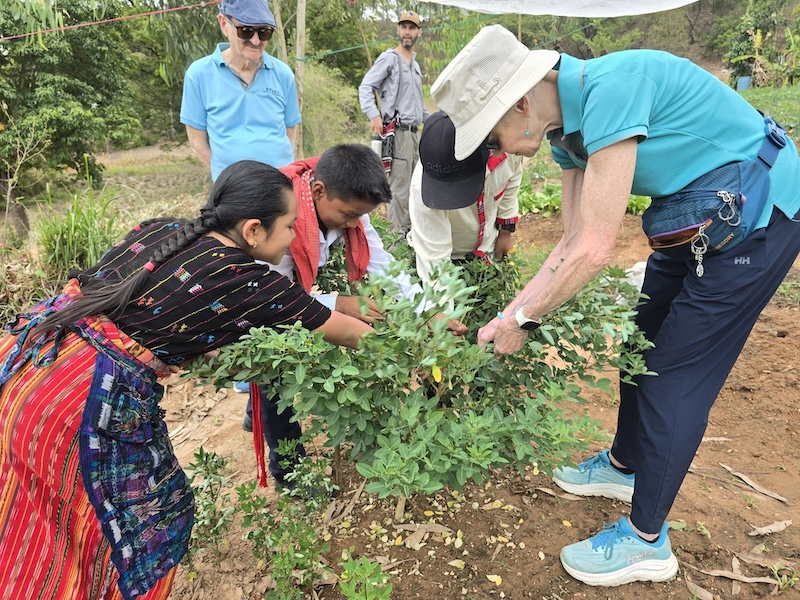
In eight primary schools around Rabinal, Guatemala, over 300 students between ages 8 and 11 spend part of their week outside the classroom in a school garden. The gardens are the core of Voces y Manos’ education program, and one reason the organization is a new community partner for service learning in Guatemala through Somos Impact Travel.
Voces y Manos was founded by Andrew Carmona and Michael Ball, who met in college on an alternative spring break trip focused on human rights in the aftermath of the Guatemalan civil war that spanned from the mid- to late-twentieth century and has far-reaching ramifiations.
The staff has since grown to 19 people working alongside a local executive director based in Rabinal, a region with a deep and difficult history that the organization faces head on.
School Gardens Teaching Sustainable Agriculture and Mayan Cosmology
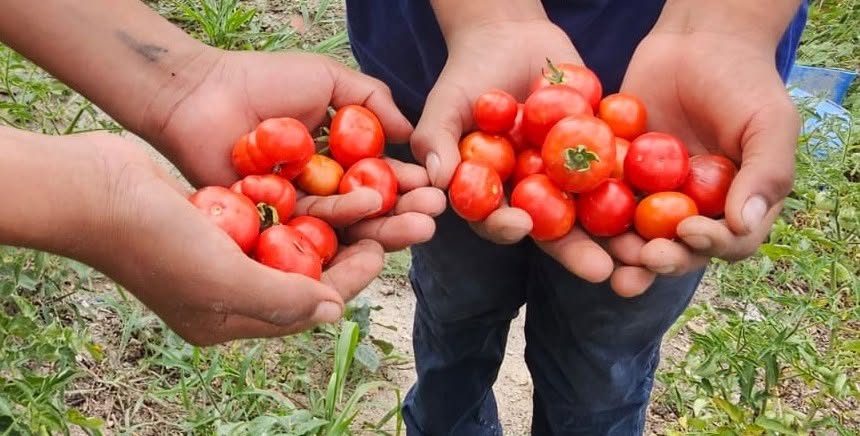
The primary school program has run for three years across eight schools and reaches 350 students and 21 teachers. Technicians work with students in the gardens on sustainable agriculture practices, and the curriculum extends past planting techniques into Mayan cosmology and cultural heritage, subjects that connect the students’ agricultural work to the traditions of their own communities. Cooking demonstrations round out the program, teaching students to prepare traditional, nutritious meals from what the gardens produce.
For a visiting high school or university group, this is where a Somos itinerary could intersect with Voces y Manos’ work, alongside the teachers running the lessons.
A Paid Internship Program that Keeps Young People in Rabinal
Voces y Manos employs 17 staff and two interns between the ages of 18 and 25, with an average staff age of 23 and a split of 10 women to seven men. The internship runs one to two years and is paid. These numbers matter in a region where the alternative for many young people is migration to Guatemala City or the United States.
Andrew Carmona describes this as an impactful part of the organization’s work, in addition to the agroecology programs that first defined it, in part because agroecology and permaculture are slower to show results and harder to document in a way that communicates impact quickly. A rural Mayan indigenous community with paid jobs for its own young adults is a positive outcome that is easier to see.
Traditional Recipes Replace Junk Food at School
Guatemala’s rural communities face a double burden of malnutrition: undernourished children alongside rising rates of diet-related disease, driven partly by the availability of cheap processed food at tienditas (small stores) near schools. Voces y Manos addresses this directly by employing community members to cook meals from ancestral recipes, which students then buy at school instead of packaged snacks.
The school program is funded evenly between Rotary International and a mix of smaller donors. The broader agroecology work runs on a different split: 66% Rotary, 33% other donors.
What Service Learning in Guatemala Looks Like for Visiting Groups
Groups traveling with Somos to work alongside Voces y Manos would take part in the same activities the organization runs year-round: digging holes and planting seedlings for reforestation, working in small vegetable beds, spending time in the school gardens with students and technicians, cooking with produce the gardens have grown, and, on Thursdays, playing soccer with the Voces y Manos team.
None of this is staged for visitors. It is the organization’s regular week, and a visiting group steps into it.
Somos and Voces y Manos: A New Partnership
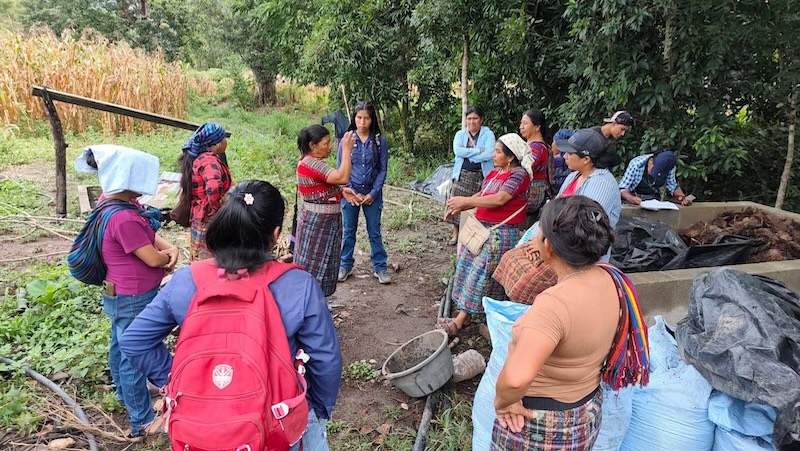
Somos and Voces y Manos connected through a mutual contact in Washington, DC, and the two organizations are now building a partnership through which Somos will bring donor groups to see and participate in the work.
Voices, Hands, and the Land that Remembers runs January 24 to 31, 2027, and puts a group directly into Rabinal, Baja Verapaz, for four days alongside Voces y Manos before concluding in Antigua. It was built as a Rotary donor tour, but registration is open to anyone, not just Rotary members.
The eight days include a model farm and seed house tour, visits to family plots in the lower valley, a morning working in a local school kitchen alongside children, and time at Rabinal’s heritage museum, where the community tells its own account of the massacres carried out against Achí communities in the early 1980s. Voces y Manos’ partner network in the region, including Qachuu Aloom and the Asociación Campesina Río Negro, is part of the program as well. The trip closes with a transfer to Antigua for a coffee tour and two nights in the colonial city before departure.
The land program is priced at $1,995 per person, which already includes a $500 direct contribution to Voces y Manos built into the cost rather than added as a separate ask. A $500 deposit holds a spot.
A Note for Educators and Donors Planning a Trip
For schools, universities, and Rotary groups weighing where to send people for hands-on, curriculum-connected work in Central America, Voces y Manos offers something specific: a Rabinal-based program with three years of operating history in eight schools, a paid youth employment track, and a nutrition program addressing a documented public health problem.
Anyone interested in seeing that work firsthand can reserve a spot on the January 2027 trip or reach out to the Somos team about future dates.