
Inside the grassroots research station in central Belize where tropical ecology is the work
Most people who visit Belize head for the coast. The Mesoamerican Barrier Reef draws divers and snorkelers from around the world, for good reason. Yet some of the most ecologically rich and scientifically active work in the country is happening inland at a small biologist-managed research station that most travelers have never heard of.
T.R.E.E.S. is a functioning field research station in central Belize where researchers catch and band tropical birds at dawn, track turtles through the jungle with radio telemetry equipment, and monitor bat populations in the dark. It is also a place where student groups, interns, and conservation-minded travelers can join that work as participants.
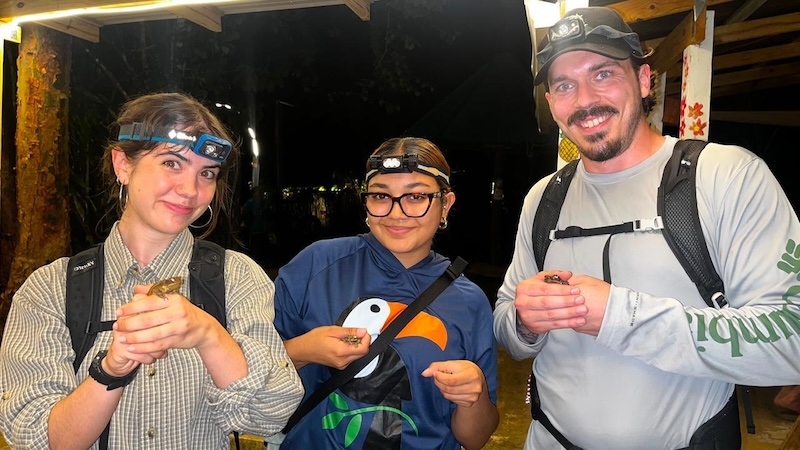
Belize’s field research station: an introduction to T.R.E.E.S.
T.R.E.E.S. is centrally located in Belize, easily accessible from the Hummingbird Highway and within reach of both the Caribbean coast and Belize’s network of inland protected areas. The station sits at the edge of some of the highest biodiversity the country has to offer, surrounded by a mosaic of tropical habitats that support an extraordinary range of species.
The organization was founded on a conviction that ecological conservation requires community involvement. From its inception, T.R.E.E.S. has operated on two parallel tracks: rigorous scientific research and active engagement with the surrounding Belizean community. Those two tracks are part of the same mission expressed in different directions.
They work within the Selva Maya corridor, which is considered the second-largest tropical rainforest in the Americas after the Amazon, covering roughly 15 million hectares (150,000 km²), of which at least 3 million hectares (30,000 km²) lie within protected areas. T.R.E.E.S. focuses research in the Maya Mountains and contributes knowledge across the wider Selva Maya.
The research programs
T.R.E.E.S. runs active ecological studies in four primary areas: birds, bats, herpetology, and turtles. Each program involves real field methodology, including mist nets for bird banding, acoustic monitoring for bats, radio telemetry for turtle tracking, and transect surveys for reptiles and amphibians. The station also maintains a herbarium and runs a tropical botany program for those interested in plant identification and forest ecology.
The bat program is one of the most distinctive pieces of what T.R.E.E.S. does. The organization coordinates RELCOM, the Latin American and Caribbean Bat Conservation Network, which connects researchers and conservationists across the region working on bat population monitoring and protection. Bats are among the most ecologically important and least understood mammals in the tropics as critical pollinators, seed dispersers, and insect controllers whose populations are under pressure across Central America. The work T.R.E.E.S. does on bats is contributing to a regional scientific effort.
The herpetology program is equally compelling for students interested in tropical biodiversity. Belize’s reptile and amphibian populations are rich and varied, and fieldwork at T.R.E.E.S. puts students in direct contact with species they would otherwise only encounter in textbooks.
According to co-executive director Mathieu Charette, “Our bird program is led by our bird branch, the Toucan Ridge Bird Observatory (T.R.B.O), which has been collecting bird data since 2012 and maintains one of the longest bird-monitoring datasets in Central America. We continue to learn more about migratory species along the Atlantic flyway as well as lesser-known Central American resident birds. We focus a lot on training of locals and international students and training them on bird banding and other bird monitoring techniques.”
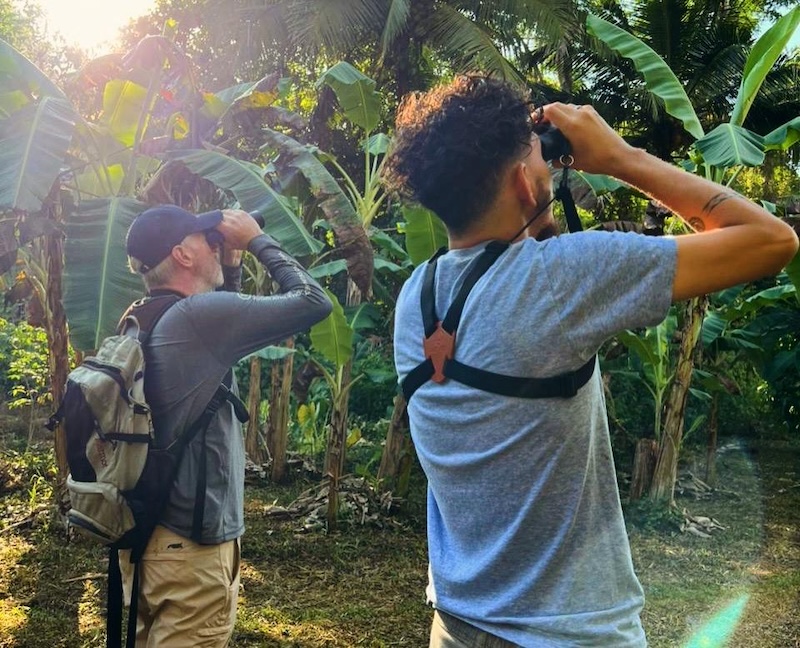
What field research looks like in practice
There is a significant gap between reading about tropical ecology and doing it. T.R.E.E.S. is built to close that gap.
A typical day at the station might begin before sunrise with a bird banding session: mist nets set in the forest, birds carefully extracted, measured, banded, and released. By mid-morning, the focus might shift to herpetology surveys along transect lines, scanning the forest floor and canopy for lizards, snakes, and frogs. After dark, the bat monitoring begins: acoustic detectors placed throughout the station grounds, mist nets set over water sources, the slow work of identifying species by echolocation call and physical measurement.
This produces something that classroom learning cannot replicate: the experience of science as a process rather than a product. Fieldwork is slow, sometimes frustrating, and occasionally extraordinary. Finding a species that hasn’t been recorded at the site before. Tracking a tagged turtle to a nest site. Holding a bird for thirty seconds before it flies back into the canopy.
Community programs and local involvement
Alongside its research work, T.R.E.E.S. runs a range of community programs for the surrounding Belizean community: environmental education in local schools, skill training, a community library project, and support for local students interested in conservation careers. The organization is explicit that locals are involved in all aspects of research and education initiatives as participants and contributors. They work closely with the Humminbird community villages and the Belizean-Kriol community of Gales point.
This dual commitment to science and community is what makes T.R.E.E.S. a genuinely unusual place. It is not a research station that tolerates the surrounding community, or an education program that gestures at science. It is both things, taken seriously, run by biologists who believe that conservation only holds when the people living inside the ecosystem understand and value what is there.
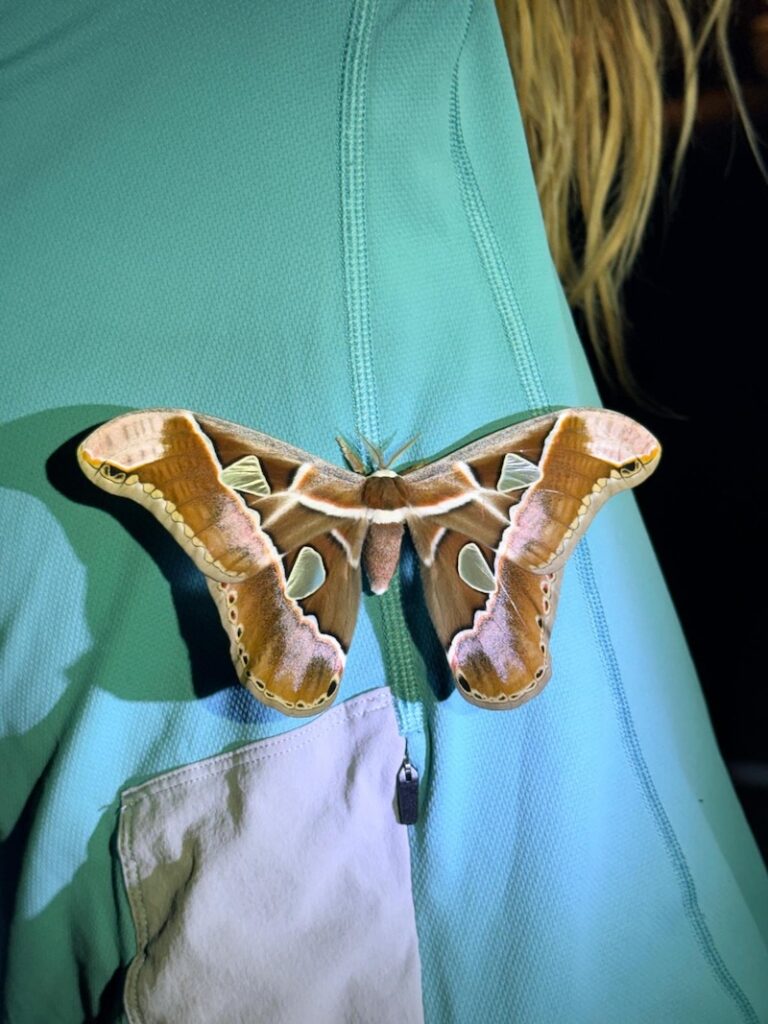
What visiting groups experience
Mathieu notes, “All students can assist in our long-term monitoring efforts and learn hands-on techniques to work with wildlife. Our student volunteer programs usually emphasize practical restoration tasks such as working on our wildlife pond, removing invasive species, and painting signs for the farm, trails, and restoration areas. Students may also join community enhancement projects in Gales Point and other Hummingbird community villages, working directly with local school children on a variety of helpful activities.”
T.R.E.E.S. welcomes university student groups, high school groups, individual researchers, and ecotourism travelers. The station offers jungle cabins and main facilities designed for group hosting and can arrange a full course or tour itinerary in Belize through its network of partners.
For groups traveling with Somos Impact Travel, T.R.E.E.S. represents a Belizean rainforest setting, active scientific research, and the opportunity to contribute meaningfully to ongoing conservation work in one of Central America’s most biodiverse countries.
Somos Impact Travel runs programs in Belize in partnership with T.R.E.E.S. and other conservation partners, connecting schools, corporate groups, Rotary clubs, and other donor groups with local NGO leaders. Visit somos.travel/experiences to explore programs or start planning your group’s expedition.